Yard Waste & Storm Debris Dumpster Rental in Asheville, NC
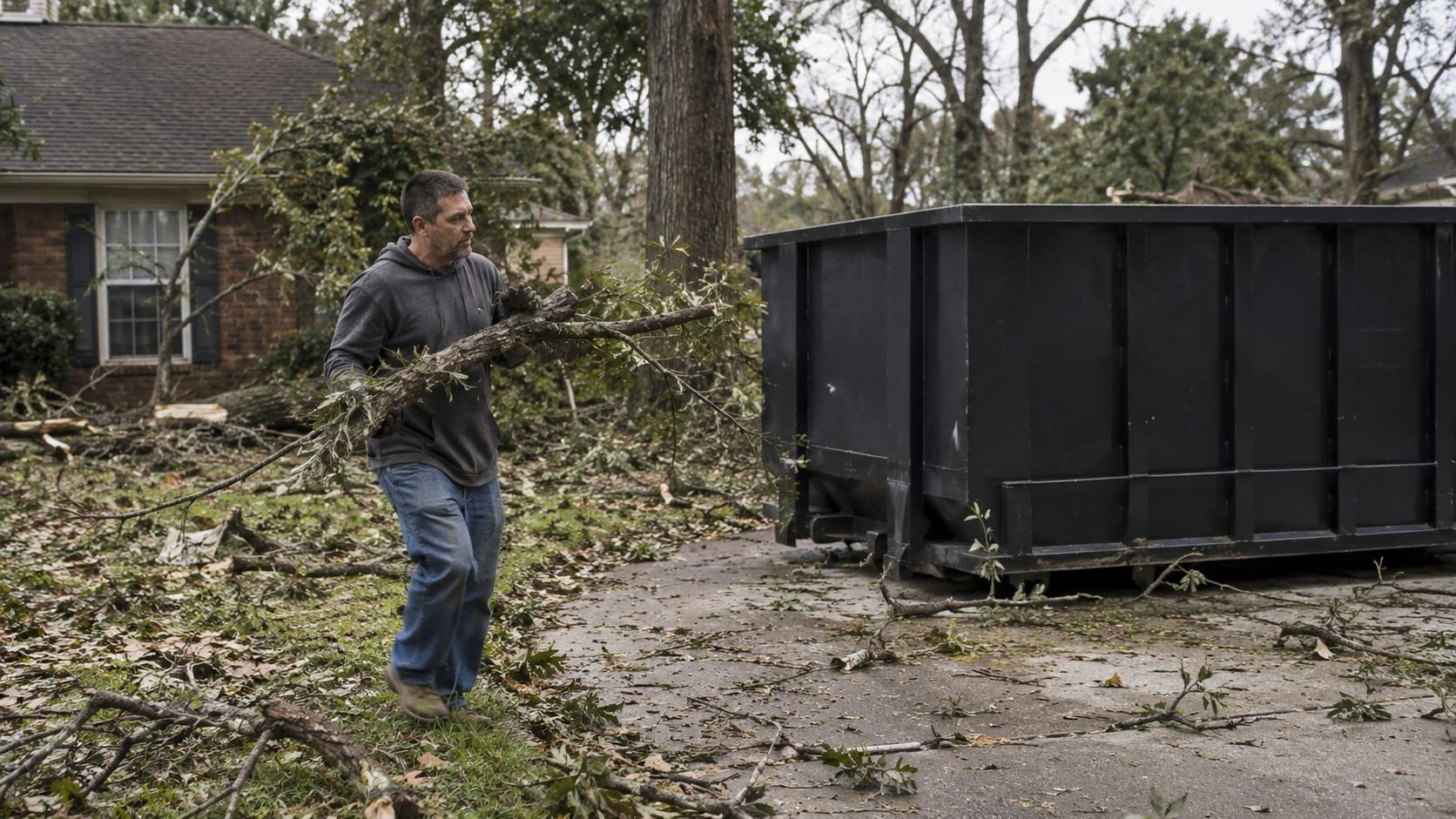
Large outdoor cleanups — whether a landscaping project or debris left behind after a storm — often produce more volume than yard waste pickup can handle at once. Planning container size, placement, and what's actually allowed in it makes the cleanup itself go a lot smoother.
- Guidance on yard waste vs. mixed storm debris
- Weight and volume planning for branches, brush, and heavier material
- What to confirm before loading — and before placement
When a Dumpster May Help With Outdoor Cleanup
Outdoor cleanups vary widely in scale — here are common situations where a dumpster tends to make sense:
Major yard cleanup
Landscaping projects
Brush & branch cleanup
Fence or deck removal
Storm-damaged property cleanup
Accumulated outdoor debris
Property preparation for renovation
Not all vegetation or storm debris can necessarily go into the same mixed container — debris type and local disposal rules both factor into what can practically be combined.
Yard Waste vs. Mixed Debris
These two categories are often handled differently, so it's worth knowing which one your project actually involves.
- Yard wasteTypically includes branches, brush, leaves, and similar organic material.
- Mixed debrisMay include lumber, damaged fixtures, roofing material, household items, and other non-organic material.
- Disposal rules can differ by typeSome disposal facilities process organic yard waste separately from general construction or household debris.
- Mixing materials may limit optionsCombining yard waste with other debris can affect which disposal routes are available.
Buncombe County disposal facilities may have their own rules about separating yard waste from general debris — confirm current requirements before your cleanup generates debris.
See the full prohibited & restricted materials guide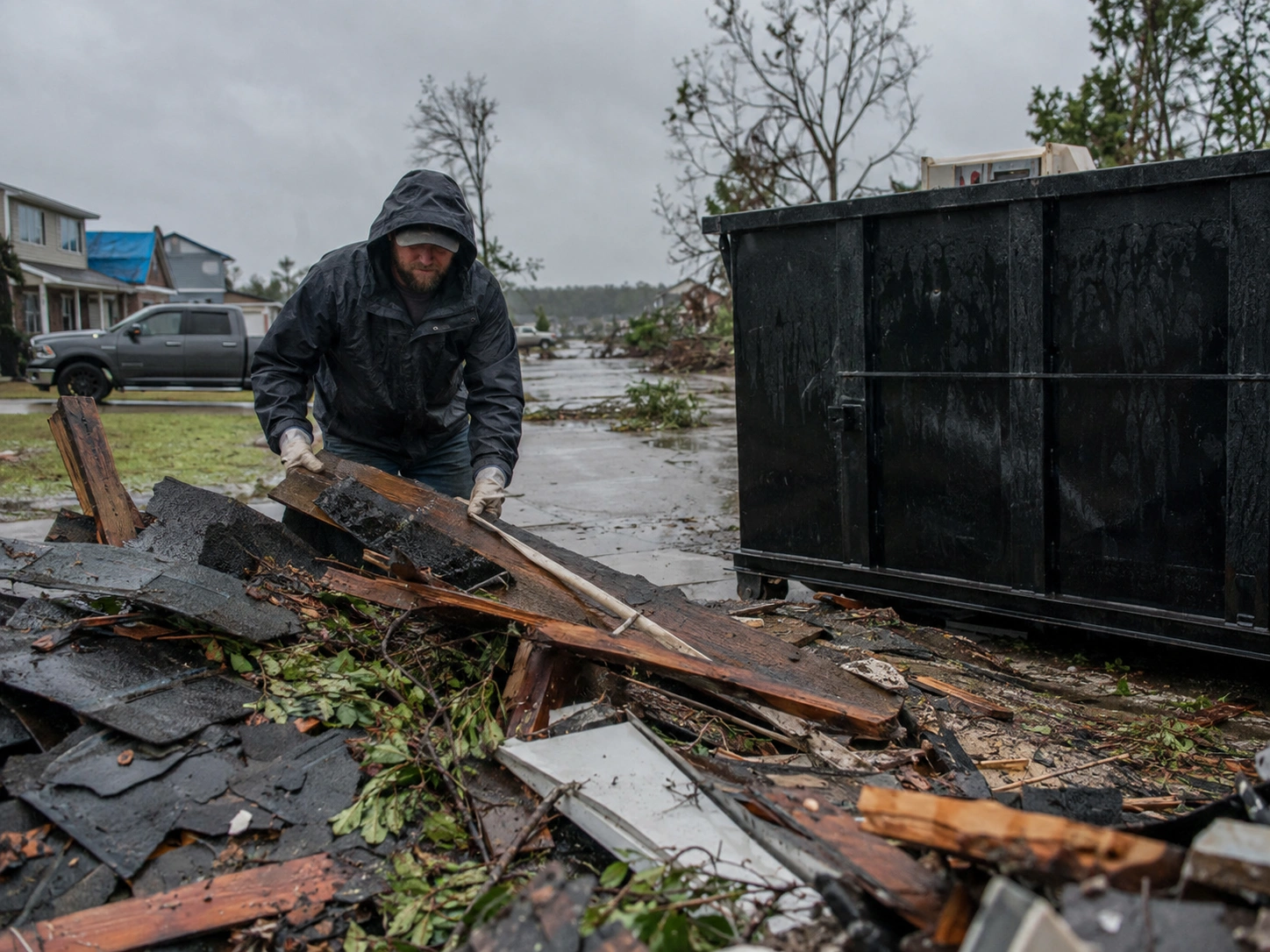
Storm Debris Often Means a Mix of Materials
Storm cleanup rarely produces just one type of debris. A single property might have:
- Tree limbs & brushOften bulky, sometimes surprisingly heavy when wet.
- Fencing & sidingStructural material that may include nails, screws, or fasteners.
- Roofing materialDense debris that adds weight quickly.
- LumberFrom damaged structures or downed trees.
- Household contentsItems damaged by water or falling debris.
- Wet or waterlogged materialCan weigh considerably more than the same material dry.
- Sharp debrisBroken material, exposed nails, or jagged edges needing careful handling.
- Unknown containers or chemicalsSometimes displaced from sheds or garages during a storm.
Hazardous or questionable material found during storm cleanup may need specialized handling rather than going in with general debris — confirm before loading anything you're unsure about.
Weight & Volume Planning for Outdoor Debris
Outdoor and storm debris can be deceptive — bulky doesn't always mean light, and volume alone doesn't tell the whole story.
- Branches can be bulky but lightBrush and limbs often take up space without adding much weight — until there's a lot of it.
- Wet material weighs moreRain-soaked branches, soil, or debris can be significantly heavier than the same material dry.
- Roofing & construction debris gets denseThese materials can add weight quickly, even in a modest-looking pile.
- Dirt, rock & concrete need separate planningThese are dense enough that they're often planned for differently than general yard debris.
- Both volume and weight matterA container can be visually full or at its weight limit first, depending on the material mix.
Weight allowances vary by provider — confirm them for your specific debris mix rather than assuming a size alone will be sufficient.
See the full dumpster size guideTree Limbs, Brush & Landscaping Material
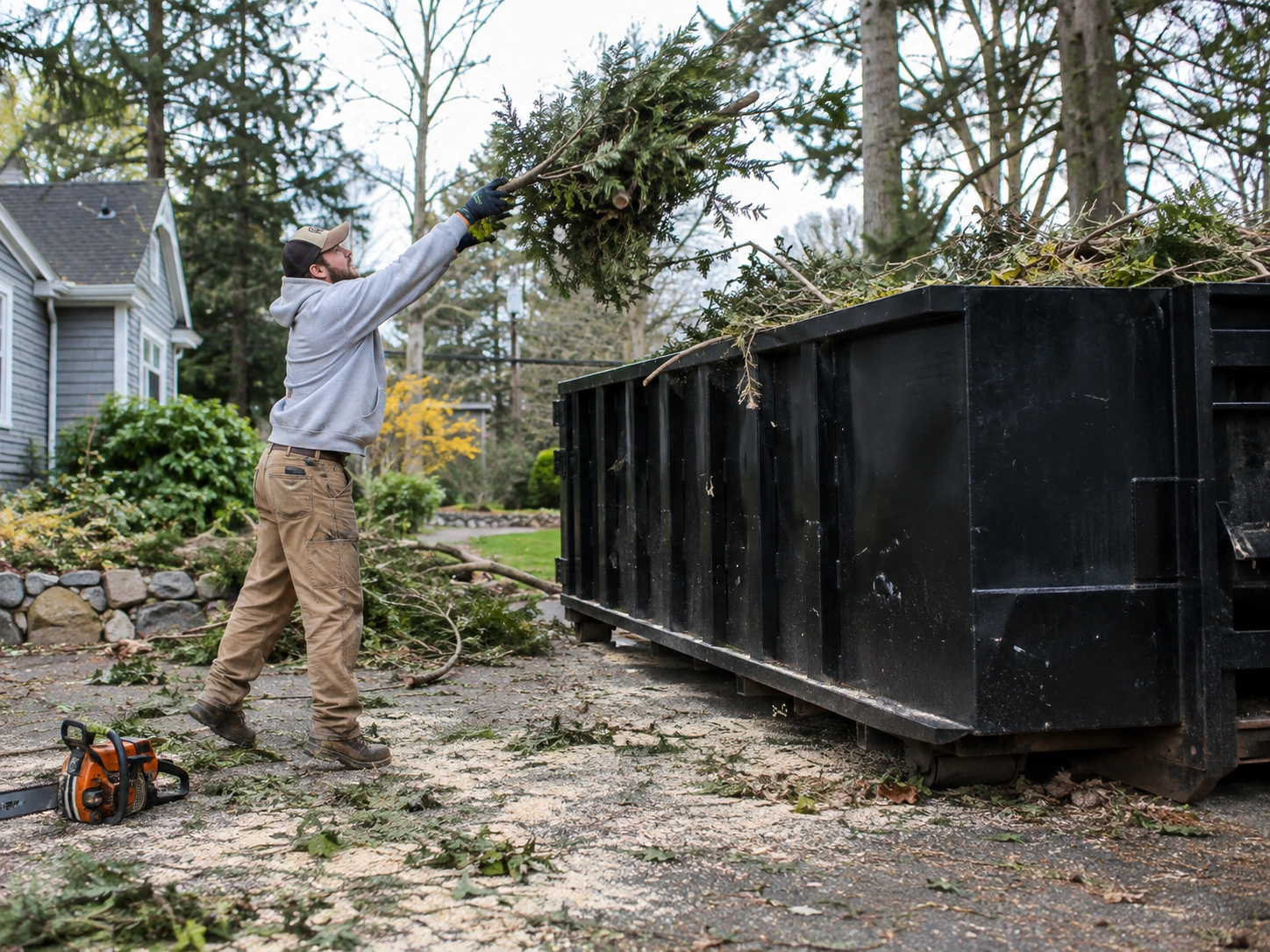
- Long branches load inefficientlyUncut limbs take up more space than the same material cut into shorter lengths.
- Cutting debris down first may be requiredSome providers have rules about material size before it can go in a container.
- Stay below the fill lineBranches shouldn't extend above the container walls or marked fill level.
- Stumps, soil & rock are much heavierThese add weight far faster than loose brush of the same size.
- Restrictions can varyWhether a specific type of yard debris is accepted depends on the provider and local disposal facility.
Post-Storm Safety Basics
Storm-damaged properties can involve hazards well beyond typical yard cleanup. A few general points worth keeping in mind:
- Unstable branches or debrisMaterial that looks stable can shift unexpectedly during cleanup.
- Nails & sharp objectsCommon in storm debris involving fencing, siding, or structural material.
- Damaged structuresPartially collapsed or weakened structures carry their own risks.
- Downed or low utility linesNever approach or attempt to move anything near a downed power line — treat all lines as live and contact the utility company or emergency services.
- Unknown liquids or containersDon't handle unidentified containers — confirm what they are before moving or disposing of them.
- Potentially hazardous building materialOlder structures may involve materials that need professional assessment before debris is disturbed.
This page provides general planning information, not safety or emergency guidance. Urgent hazards — downed lines, unstable structures, chemical exposure, or anything similar — should be handled by the appropriate qualified professionals or local authorities, not as a DIY cleanup step.
Placement Planning After a Storm or Yard Project
Outdoor cleanups sometimes change site conditions in ways that affect where a container can go:
- Driveway & site accessConfirming the area is still clear enough for delivery.
- Low branchesIncluding any that may have shifted or broken during a storm.
- Overhead wiresWorth double-checking after any storm event that may have affected them.
- Soft or wet groundA loaded container needs a stable surface — soft or saturated ground may not be suitable for placement.
- SlopeSloped sites can limit safe placement options.
- Parked vehicles or equipmentAnything that may need to move before delivery.
- Clear truck routeA path free of fallen debris for the delivery vehicle.
- Placement near the cleanup areaClose enough to be practical without blocking access to the site.
A stable, suitable surface is generally required for safe placement — a provider may not be able to place a container on ground that isn't stable enough to support it.
See the full placement & access guideWhat Affects Cost for Yard & Storm Cleanup
Pricing depends on a combination of factors rather than one flat rate.
Debris Volume
More material generally means a larger container or a longer rental.
Debris Type
Organic yard waste, wet material, and mixed storm debris can be priced differently.
Weight
Wet or dense material can affect included tonnage allowances.
Container Capacity
Larger containers generally cost more, though the right size can be more efficient than a second one.
Rental Duration
Most rentals include a set number of days, with a possible extension charge for longer cleanups.
Disposal & Haul Considerations
Local facility fees and any overage for exceeding weight or fill limits.
When a Dumpster May Not Be the Right Option
A dumpster isn't always the best fit for outdoor cleanup. It may be worth considering alternatives when:
- The amount of debris is smallA modest yard-waste pile may not justify a full container.
- Another local collection or drop-off option appliesSome yard waste may be eligible for existing local pickup or drop-off programs — check what's currently available in your area.
- The debris is hazardousChemicals, fuel, or unknown substances need specialized disposal, not a standard dumpster.
- Structures are unstableDebris tied to a partially collapsed or unsafe structure needs professional assessment first.
- Utility hazards are presentAnything involving downed lines needs the utility company or emergency services, not a cleanup container.
- Specialized tree removal is neededLarge trees or hazardous limbs may require a tree service rather than DIY cleanup.
- Debris requires regulated disposalCertain materials have disposal requirements a standard dumpster rental doesn't cover.
Compare dumpster rental to other disposal options · Learn how local disposal facilities work
Yard & Storm Debris Planning in Asheville
Asheville's mountain terrain, tree cover, and exposure to severe regional weather mean yard and storm debris cleanup comes up regularly for area properties. The region has also seen significant storm-related cleanup activity in recent years, including after Hurricane Helene, which is part of why planning for debris volume, weight, and disposal ahead of time is genuinely useful here — not just after a major event, but for routine yard projects too.
- Seasonal yard cleanup and landscaping debris on sloped or wooded properties
- Storm-related tree and structural debris following severe weather events
- Sloped or limited-access sites that affect where a container can be safely placed
- Renovation and rebuild debris tied to storm-related property repairs
These are practical planning themes, not guarantees of availability or current program status — confirm details for your property and project when you request a quote.
A Practical Yard & Storm Cleanup Checklist
Identify debris categories
Separate organic yard waste from mixed or structural debris.
Set aside hazardous or questionable materials
Chemicals, fuel, or unknown containers need separate handling.
Estimate bulky vs. heavy debris
Branches and brush vs. dense material like roofing, dirt, or rock.
Determine a safe placement area
Stable, accessible ground clear of hazards.
Check truck & access clearance
A clear route for delivery, free of fallen debris.
Keep debris below the fill level
Avoid material extending above the container walls.
Confirm restrictions before loading
Check what your provider and local facility accept before assuming.
Keep debris away from children & pets
Storm and yard debris can include sharp or unstable material.
Contact professionals for hazards
Electrical, structural, or hazardous-material risks need qualified professionals, not DIY handling.
Yard Waste & Storm Debris Questions, Answered
Can yard waste go in a dumpster?
Often yes, though some providers and disposal facilities handle organic yard waste differently than general debris. Confirm current policy before assuming branches, brush, or leaves can go in with other material.
Can tree branches go in a dumpster?
Usually, but long branches take up space inefficiently and some providers require cutting debris down to a certain length first. Confirm any size requirements before loading.
Can roofing debris from storm damage go in a dumpster?
Often yes, but roofing material is dense and can add weight quickly, so sizing and weight planning matter more than for typical yard debris. Confirm expected volume and weight allowances before your cleanup starts.
Can dirt, rock, or concrete go in a dumpster?
Sometimes, but these materials are dense and heavy enough that they're often planned for separately from general yard or storm debris. Confirm with your provider before mixing them with other material.
How do I choose a dumpster size for storm cleanup?
Think through debris type as well as volume — a mix of branches, roofing, and structural material behaves differently than yard waste alone. Our size guide covers how to plan for it.
What should I do with paint, fuel, or chemicals found during cleanup?
These typically need separate disposal rather than going in with general debris. Set them aside and confirm the correct disposal route — don't guess with unknown containers or substances.
Can a dumpster be placed on wet or soft ground?
Generally, a stable, load-bearing surface is needed for safe placement — soft or saturated ground may not support a loaded container. Discuss ground conditions when you request a quote.
How high can I load storm or yard debris?
Up to the marked fill line, same as any load — but branches and brush settle and compact more than they look like they will, so a pile that seems close to the line can drop noticeably once it's rained on or shifted during pickup. Leave a little margin rather than loading right to the edge.
Do local disposal rules affect what can go in a dumpster?
Yes — local landfill, transfer station, and recycling facility rules can affect what's accepted and whether materials like yard waste need to be separated. Confirm current requirements before your project rather than after.
Planning a Yard or Storm Cleanup?
Tell us about the debris involved and your property, and we'll help you think through sizing and placement.