What Can Go in a Dumpster in Asheville, NC
"What can go in a dumpster?" isn't a single yes-or-no question. It depends on the material itself, North Carolina disposal law, Buncombe County facility rules, and your provider's own policy — and some materials need specialized handling no matter who you rent from.
- How state, county, and provider rules each play a role
- Which materials commonly need separate handling
- What to confirm before you load anything questionable
What Can Go in a Dumpster?
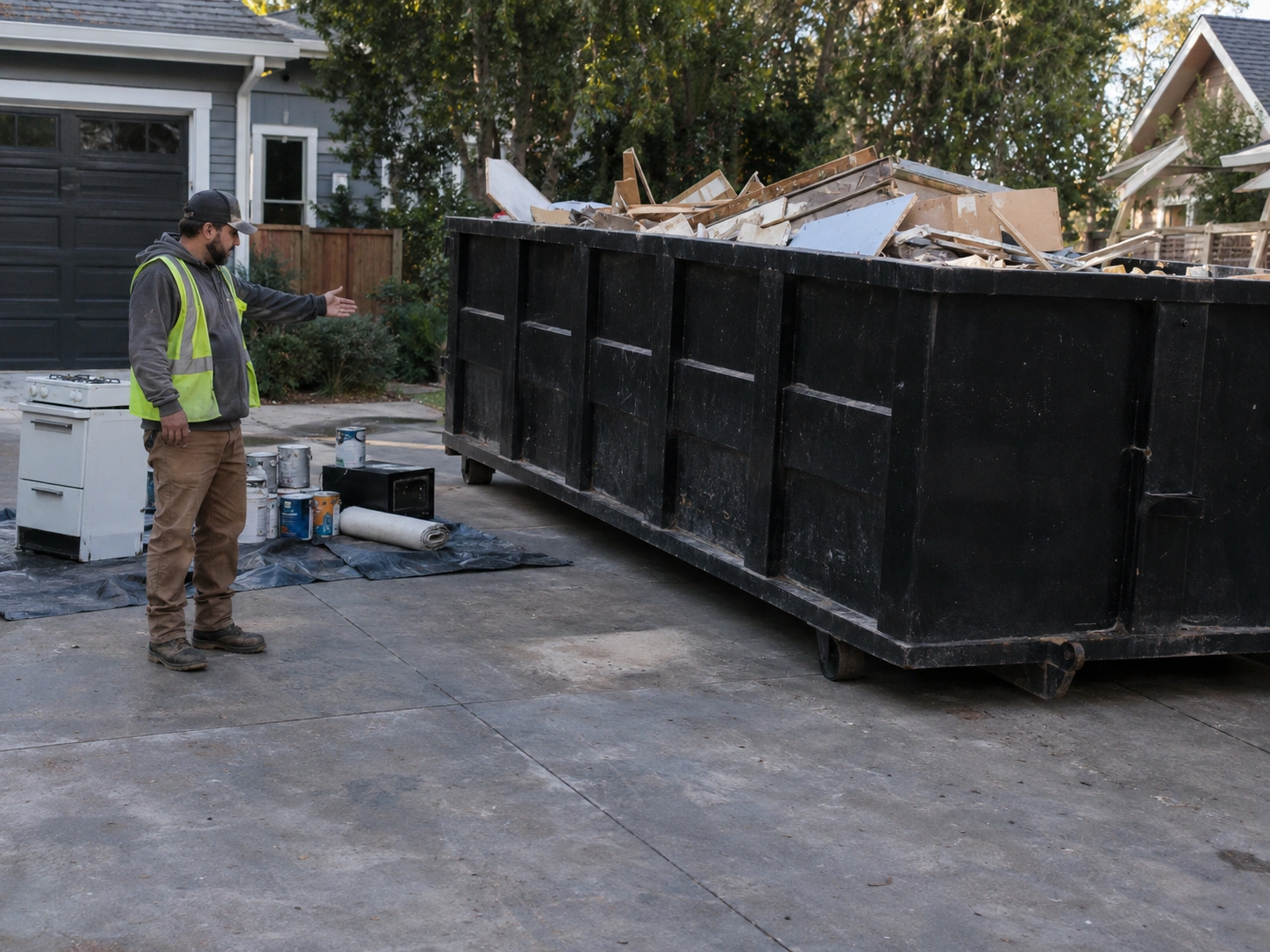
Ordinary household cleanout debris and general construction material are usually fine for a roll-off, but "anything except hazardous waste" isn't an accurate rule. Batteries, electronics, tires, paint, and heavy debris all fall into a gray area shaped by state law, local facility rules, and your specific provider's policy — worth confirming rather than guessing.
Three Separate Things Determine What You Can Load
No generic online list can answer this for you, because three independent things are involved:
A. Provider Policy
What your specific dumpster company will or won't accept — this isn't stated as a fixed list on this page.
B. Disposal-Facility / Local Rules
What Buncombe County's landfill and specialty programs accept, and how they route different materials.
C. State & Federal Regulation
What North Carolina and federal rules say about disposal — separate from whether a hauler accepts something.
A material can be legal in ordinary trash but still refused by a specific provider, or banned from landfill disposal but have a legitimate recycling route. Throughout this page, a fact about state or county rules is not a statement about what any rental provider will accept — confirming with your provider is the only way to know that part for your project.
Household, Construction & Heavy Debris
Everyday Cleanout Items
Furniture, household clutter, boxes, non-hazardous household items, lumber, cabinets, fixtures, and general remodeling debris are commonly handled in a standard roll-off.
Construction & Demolition Debris
Drywall, lumber, siding, shingles, flooring, and fixtures are common C&D materials. Acceptance can depend on contamination, material type, and weight — not just the category alone. See the construction & renovation dumpster rental page.
Heavy Materials: Concrete, Brick, Dirt & Rock
These often have dedicated disposal or recycling routes and can create real weight issues even in a large container — size alone doesn't determine whether a container can handle them. Buncombe County operates a separate concrete/brick/block recycling area, though where a specific provider's debris actually ends up is provider-specific. See the size guide for weight-vs-volume planning.
Recyclables & State Landfill-Ban Materials
Yard Waste
North Carolina restricts yard trash from landfill disposal. That doesn't mean it can never be collected — it means the disposal, recycling, or composting route matters more than for ordinary trash. Buncombe County handles yard and wood materials separately from general mixed waste. See the yard waste & storm debris page.
Fluorescent Lights & Mercury-Containing Items
North Carolina bans fluorescent lights and mercury-containing thermostats specifically from construction-and-demolition landfills — a rule for that disposal category, not a statement that these are banned from every solid-waste route everywhere. Buncombe County has separate light-bulb recycling options.
Liquids, Fuels & Chemicals
Paint, Solvents & Chemicals
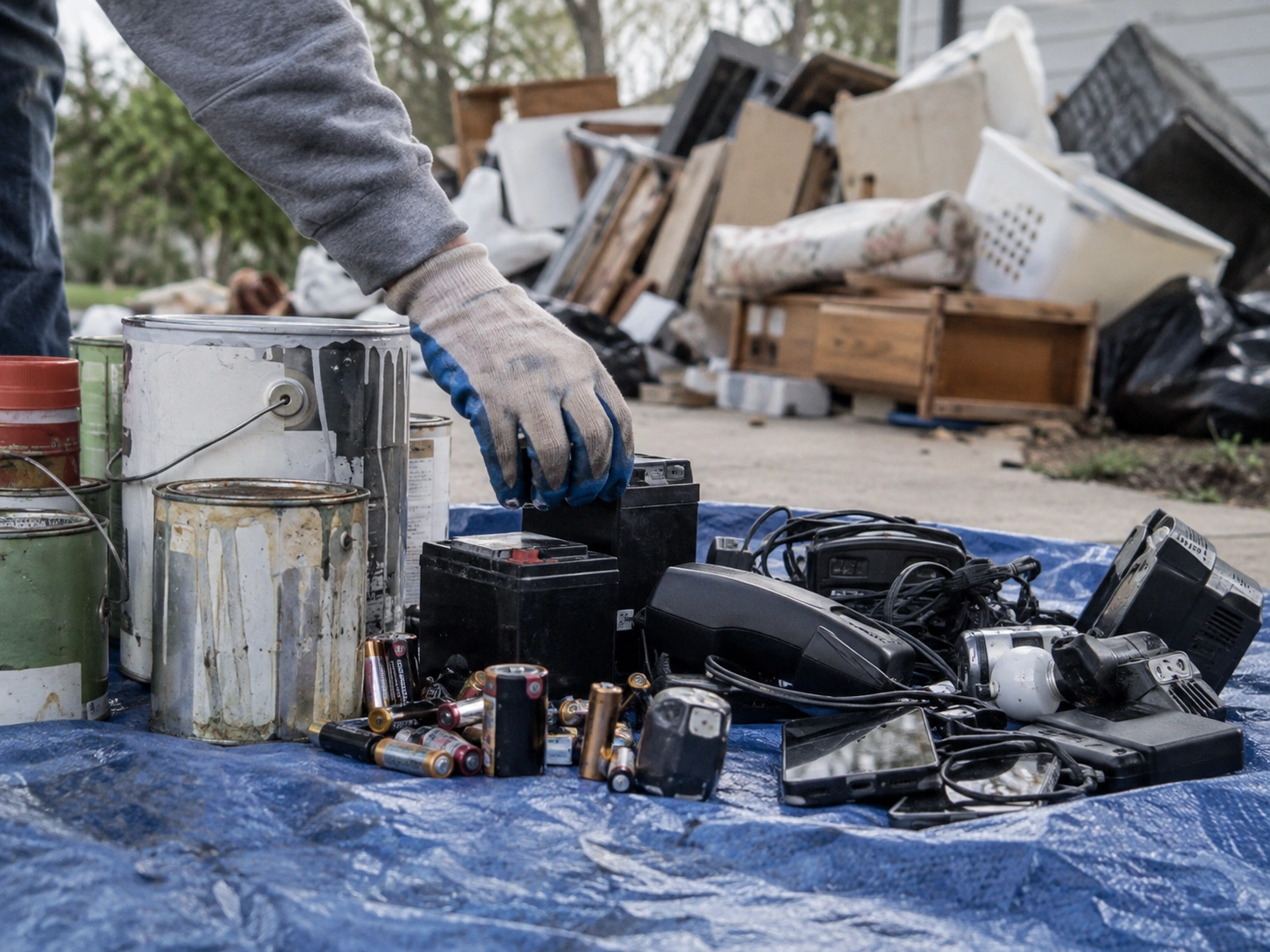
Buncombe County directs these to its Household Hazardous Waste / TV-Paint collection events rather than ordinary mixed trash — paint, thinners, gasoline, kerosene, pesticides, and certain automotive fluids among them, subject to the program's current rules. Don't pour out liquids, dry out chemicals, or mix products to make disposal "easier" — confirm the correct route before you're stuck with leftovers.
Used Oil & Antifreeze
Covered by North Carolina's landfill-ban and special-management rules, with separate handling routes through Buncombe County's HHW program. Don't drain, combine, or otherwise handle these fluids yourself.
Propane, Fuels & Flammables
Pressurized cylinders and flammable liquids need special confirmation and handling. This page doesn't cover depressurizing, puncturing, or draining any container — confirm the correct disposal route before assuming any of this can go in a standard container.
Batteries & Electronics
Batteries
- Lead-acid batteriesAlready under a North Carolina landfill-disposal ban.
- Lithium-ion batteriesBecome subject to a statewide North Carolina landfill-disposal ban on December 1, 2026 — not yet in effect as of the current date.
- Fire riskBatteries carry a real fire risk and shouldn't be casually mixed into general debris; a damaged or swollen battery needs a battery-recycling or hazardous-material channel, not general debris.
Electronics & Televisions
North Carolina bans covered computer equipment and televisions from landfill disposal — a specific rule for those categories, not every electronic device everywhere. Buncombe County has separate electronics recycling options.
Appliances & Tires
White Goods / Appliances
North Carolina's landfill-disposal ban list includes white goods, and some appliances involve refrigerant or other special-handling considerations — that's a job for a qualified technician, not a DIY step. Buncombe County maintains a separate white-goods recycling area.
Tires
Whole scrap tires are covered by North Carolina landfill-disposal restrictions and have their own management routes rather than going in with general debris.
Renovation Hazards: Asbestos & Lead
Asbestos-Containing or Suspect Material
Older flooring, insulation, siding, and other building materials can contain asbestos, and you can't identify it reliably just by looking. North Carolina has specific requirements for asbestos in demolition and renovation activity, which can include accredited asbestos professionals and notification or permitting processes for qualifying projects.
This page doesn't tell you how to test, disturb, remove, or bag suspected asbestos, and it shouldn't go into a standard rental dumpster as ordinary demolition debris. If asbestos is suspected, stop and get qualified, accredited professionals and the relevant authorities involved before proceeding.
Lead-Paint & Lead-Containing Renovation Debris
Handling depends on the type of project and how the waste gets classified — residential renovation debris and non-residential or industrial hazardous waste aren't necessarily treated the same way under federal and state rules. This isn't a blanket statement that all lead-painted residential debris is prohibited from general disposal, and it isn't legal waste-classification advice. If your project involves lead-painted surfaces, especially in an older building, confirm the right handling route before assuming it's ordinary debris.
Medical, Biohazard & Extreme Special Waste
Medical Waste & Sharps
Buncombe County Landfill does not accept non-infectious medical waste, and the County's HHW guidance states bio-hazardous materials aren't accepted through that program. This isn't medical advice, and it isn't an instruction to put needles, sharps, or any medical or biohazard waste into a rental dumpster — that needs confirmation through appropriate local and provider channels.
Radioactive Materials & Explosives
Buncombe County's HHW program states these aren't accepted at any time. If you have or suspect either, that's a matter for appropriate authorities and specialists, not a rental dumpster.
Unknown Containers or Material
If you don't know what a liquid, powder, or container actually holds, don't assume it belongs in ordinary mixed debris — and don't open, smell, mix, or otherwise alter it to find out or make it "easier" to dispose of. Get appropriate professional or local guidance for anything you can't confidently identify.
Materials Decision Table
General guidance, not a guarantee of any provider's specific policy.
| Material Category | Ordinary Mixed Dumpster? | Important Consideration | Where to Verify |
|---|---|---|---|
| Household furniture | Commonly handled — confirm provider | Bulky items fill volume quickly | Your dumpster provider |
| C&D debris | Commonly handled — confirm provider | Weight and contamination can affect acceptance | Your dumpster provider |
| Concrete / brick | Separate/special route | Very heavy; may have a dedicated recycling route | Provider & Buncombe County |
| Yard waste | Separate/special route | NC restricts yard trash from landfill disposal | Buncombe County |
| Paint / chemicals | Regulated/specialized — confirm before handling | Buncombe County routes these to HHW/TV-Paint events | Buncombe County Solid Waste |
| Lead-acid batteries | Regulated/specialized — confirm before handling | Already under an NC landfill-disposal ban | NC DEQ & Buncombe County |
| Lithium-ion batteries | Date-sensitive rule | NC landfill ban begins December 1, 2026 | NC DEQ |
| Electronics / TVs | Regulated/specialized — confirm before handling | NC bans covered computer equipment & TVs from landfills | NC DEQ & Buncombe County |
| Tires | Regulated/specialized — confirm before handling | Covered by NC landfill-disposal restrictions | NC DEQ & Buncombe County |
| White goods (appliances) | Separate/special route | NC landfill ban; may involve refrigerant handling | NC DEQ & Buncombe County |
| Used oil / antifreeze | Regulated/specialized — confirm before handling | Covered by NC landfill-ban/special-management rules | Buncombe County HHW |
| Fluorescent lights | Separate/special route | Banned from NC C&D landfills specifically | NC DEQ & Buncombe County |
| Asbestos-suspect material | Regulated/specialized — confirm before handling | Requires accredited professionals; do not disturb | Accredited asbestos professional & NC authorities |
| Medical / biohazard waste | Not accepted through standard routes | Buncombe County Landfill does not accept non-infectious medical waste | Buncombe County & appropriate medical waste channels |
A Landfill Ban Doesn't Equal a Provider's Acceptance Policy
This distinction matters more than almost anything else on this page:
- A landfill ban is about legal disposal routesIt says a material can't go to landfill a certain way — not what any specific hauler does with it.
- A provider's policy can be stricter or differentA dumpster company may decline materials a landfill technically accepts, or handle separation and recycling differently.
- Facility acceptance doesn't prove hauler acceptanceA local facility taking a material doesn't mean every roll-off company will take it in a rental container.
Treat state and county rules as context, not a substitute for confirming your provider's actual policy.
Buncombe County Local Disposal Context
The County maintains separate categories rather than treating everything as mixed trash:
Municipal solid waste
Construction & demolition (C&D)
White-goods recycling
Wood-waste recycling
Concrete/brick/block recycling
Household Hazardous Waste (HHW) program
Specific schedules and program details change and aren't published as fixed content here — check with Buncombe County directly, or see how local disposal facilities work.
Before You Load — Checklist
Identify the material
Know what you're dealing with before it's already in the container.
Separate liquids & chemicals
Keep these apart from general debris.
Set aside batteries & electronics
Don't mix them in.
Set aside tires & appliances
These usually need a separate route.
Plan for heavy debris
Concrete, brick, dirt, and rock need weight planning.
Flag asbestos/lead concerns
Especially in older buildings.
Flag medical/sharp materials
These need separate handling entirely.
Ask your provider first
Before loading questionable items, not after.
Check current County/state guidance
Rules and programs change over time.
Common Mistakes
- Assuming "household item" means automatically allowedSome still fall under special rules.
- Hiding questionable material under other debrisCreates disposal problems that surface later.
- Mixing chemicals or liquidsCan create hazards and complicate disposal.
- Assuming "landfill accepts it" means the provider doesTwo separate questions.
- Confusing a recycling route with ordinary trashSome materials need a specific path.
- Ignoring heavy-material limitsWeight matters even with visible space left.
- Loading unknown containersNot knowing what something is isn't a reason to guess.
- Treating asbestos or special waste like normal C&DNeeds specialized handling, not ordinary demolition disposal.
- Relying on an old online listDisposal rules and programs get updated.
Waste rules and facility acceptance policies can change. This page is general information, not legal, environmental, or medical advice. Confirm questionable materials with your dumpster provider and the appropriate current Buncombe County, North Carolina, or federal authority before loading.
Materials & Restrictions Questions, Answered
What can I put in a dumpster in Asheville?
Ordinary household cleanout and construction debris are usually fine, but it depends on the material, current NC and Buncombe County rules, and your provider's policy — there's no single universal list. See the categories above for the common ones.
What can you not put in a roll-off dumpster?
Hazardous materials, regulated items like lead-acid batteries and covered electronics, and specialized waste like asbestos or medical waste typically need separate handling. Confirm anything questionable with your provider first.
Can I put paint in a dumpster?
Buncombe County routes paint to its Household Hazardous Waste / TV-Paint events, not ordinary trash. That's separate from whether a dumpster provider accepts it — confirm before assuming either way.
Can batteries go in a dumpster?
Lead-acid batteries are already under an NC landfill ban, and lithium-ion batteries join them on December 1, 2026. Batteries also carry fire risk, so don't mix them into general debris — confirm the right route with your provider or the county.
Can electronics go in a dumpster?
NC bans covered computer equipment and TVs from landfill disposal, and Buncombe County has separate electronics recycling. Confirm with your provider before loading any electronic device.
Can tires go in a dumpster?
Scrap tires are covered by NC landfill-disposal restrictions with their own management routes — confirm with your provider before loading any.
Can a refrigerator go in a dumpster?
Refrigerators and other white goods are on NC's landfill-ban list and can involve refrigerant handling. Buncombe County has a separate recycling area for these — confirm the route with your provider.
Can yard waste go in a dumpster?
NC restricts yard trash from landfill disposal, and Buncombe County handles yard and wood material separately — that doesn't mean it can't be collected, just that the route matters. See the yard waste page.
Can concrete or dirt go in a dumpster?
Sometimes, but these materials are heavy enough to often need separate planning, and Buncombe County has a dedicated concrete/brick/block recycling area. Confirm before mixing dense material with other debris.
Can roofing shingles go in a dumpster?
Often, but shingles are dense and add weight fast — confirm your weight allowance. See the construction dumpster page for roofing-specific planning.
Can asbestos go in a dumpster?
No — suspected asbestos shouldn't be treated as ordinary demolition debris. NC has specific requirements for asbestos in demolition and renovation work. If it's suspected, stop and involve accredited asbestos professionals and the relevant authorities.
What should I do with unknown chemicals or hazardous materials?
Don't guess. If you can't identify a liquid, powder, or container, don't load it, and don't open, mix, or alter it to find out. Get appropriate professional or local guidance instead.
This guide uses current information from Buncombe County Solid Waste, the North Carolina Department of Environmental Quality, and appropriate state/federal guidance for specialized materials. Rules and programs may change — see our editorial policy and disclaimer for more.
Not Sure About a Material?
Tell us what's involved in your project, and we'll help you figure out what needs confirming before you load it.