How Dumpster Rental Works
Dumpster rental tends to go smoothly when four things are clear upfront: what the project involves, which container suits it, where it will sit, and what to expect around timing and pickup. Here's how the process generally works.
- The typical process from quote to pickup
- What to prepare before you request a quote
- What to confirm at each step, since policies vary by provider
How Does Dumpster Rental Work?
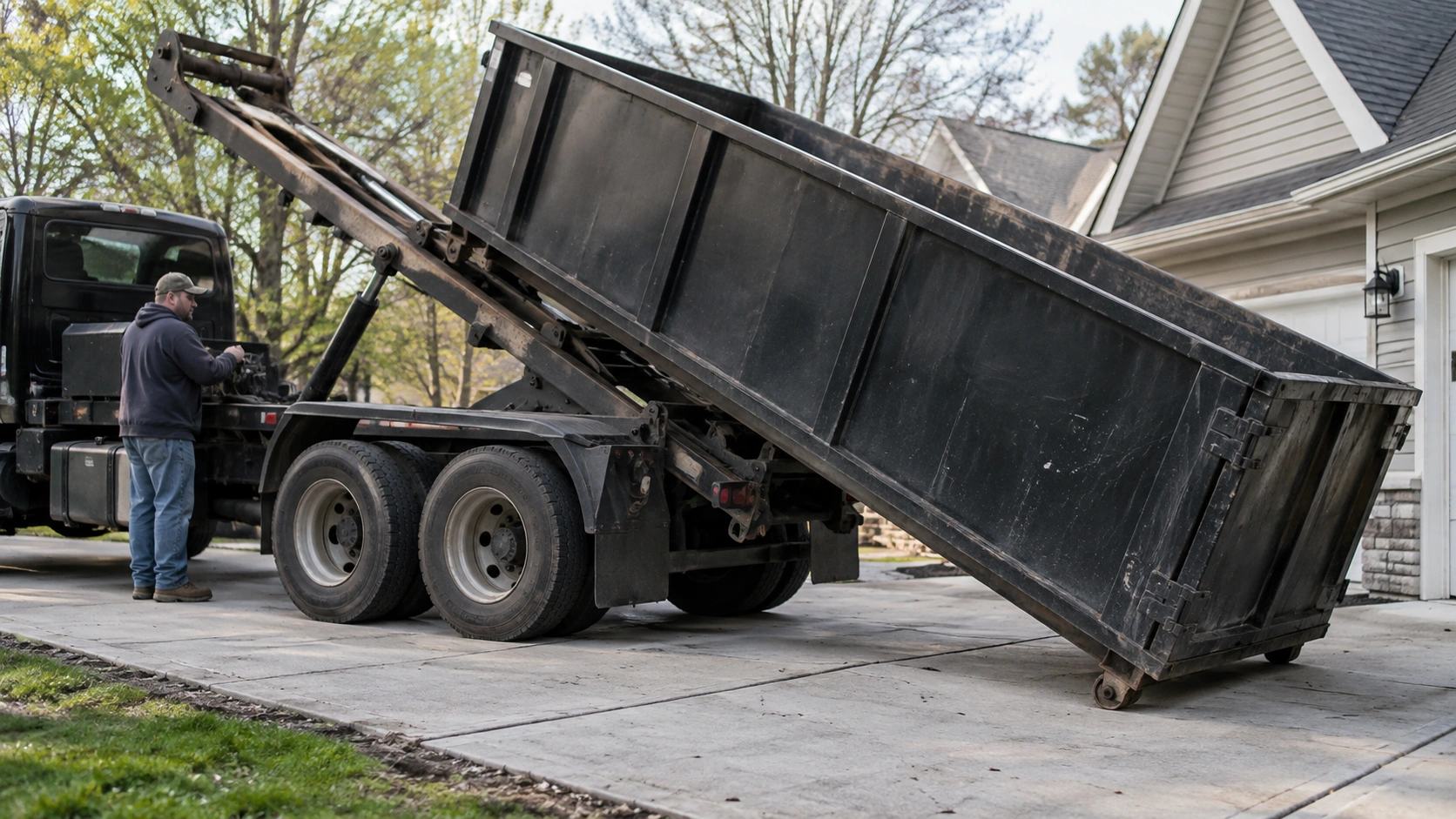
You describe the project and debris, settle on a container, and go over what the quote actually covers. Once you've picked a safe spot for it, the container gets delivered, you load it within the weight and fill limits, and then you schedule pickup. From there the waste heads to a landfill, transfer station, or recycling route depending on what it is. Exact timing and policy details vary by provider — the steps below cover each part.
Describe Your Project
The more specific you are up front, the more accurate the size and quote recommendation will be. Have these ready:
Project type
Cleanout, renovation, construction, yard cleanup, or something else.
Property/location
Where the container needs to go.
Debris category
Household, construction, yard waste, or a mix.
Estimated volume
A rough sense of how much material.
Heavy or dense material
Concrete, dirt, roofing, or similar.
Questionable materials
Anything you're unsure needs special handling.
Desired timing
When you'd like it delivered.
Expected duration
Roughly how long you'll need it on-site.
Placement area & access
Where on the property it would sit, plus any gates, overhead clearance, or truck-access issues.
Public vs. private placement
Whether it needs to sit on a street or right-of-way.
Contact information
How your provider can reach you.
Choose an Appropriate Container
Sizing is about more than volume — weight matters too, and bulky material behaves differently than dense material in the same container. Available placement space can rule certain sizes out on its own, and inventory varies by provider, so there's no size that's automatically right for a given project type.
See the full dumpster size guideUnderstand the Quote
Before booking, clarify exactly what's covered:
- Rental periodHow many days are included.
- Included weight/tonnageWhat allowance applies before overage kicks in.
- Delivery & pickupWhether both are part of the quoted price.
- Disposal chargesBundled in, or billed separately.
- Overage termsWhat happens if you go over the included weight.
- Extra daysHow extending the rental is handled.
- Material restrictionsWhat can and can't go in.
- What triggers an extra chargeWorth knowing before, not after.
Choose the Placement Area
Where the container sits affects both delivery and how easy loading will be:
- Stable surfaceFlat and load-bearing enough for the container once it's full.
- Enough footprintRoom for the container itself in your driveway or parking area.
- Truck accessRoom to approach and maneuver — usually more than the container needs on its own.
- Overhead clearanceBranches and wires need to be clear of the placement spot.
- GatesAnything that needs to be open or unlocked.
- Parked vehiclesMay need to move first.
Delivery equipment generally needs more clearance than the container's own footprint — see the placement & driveway guide for what to check. If the spot you have in mind is a public street or right-of-way rather than your own driveway, that can involve separate permit requirements — the permit & placement guide covers what's currently confirmed for Asheville.
Delivery Day
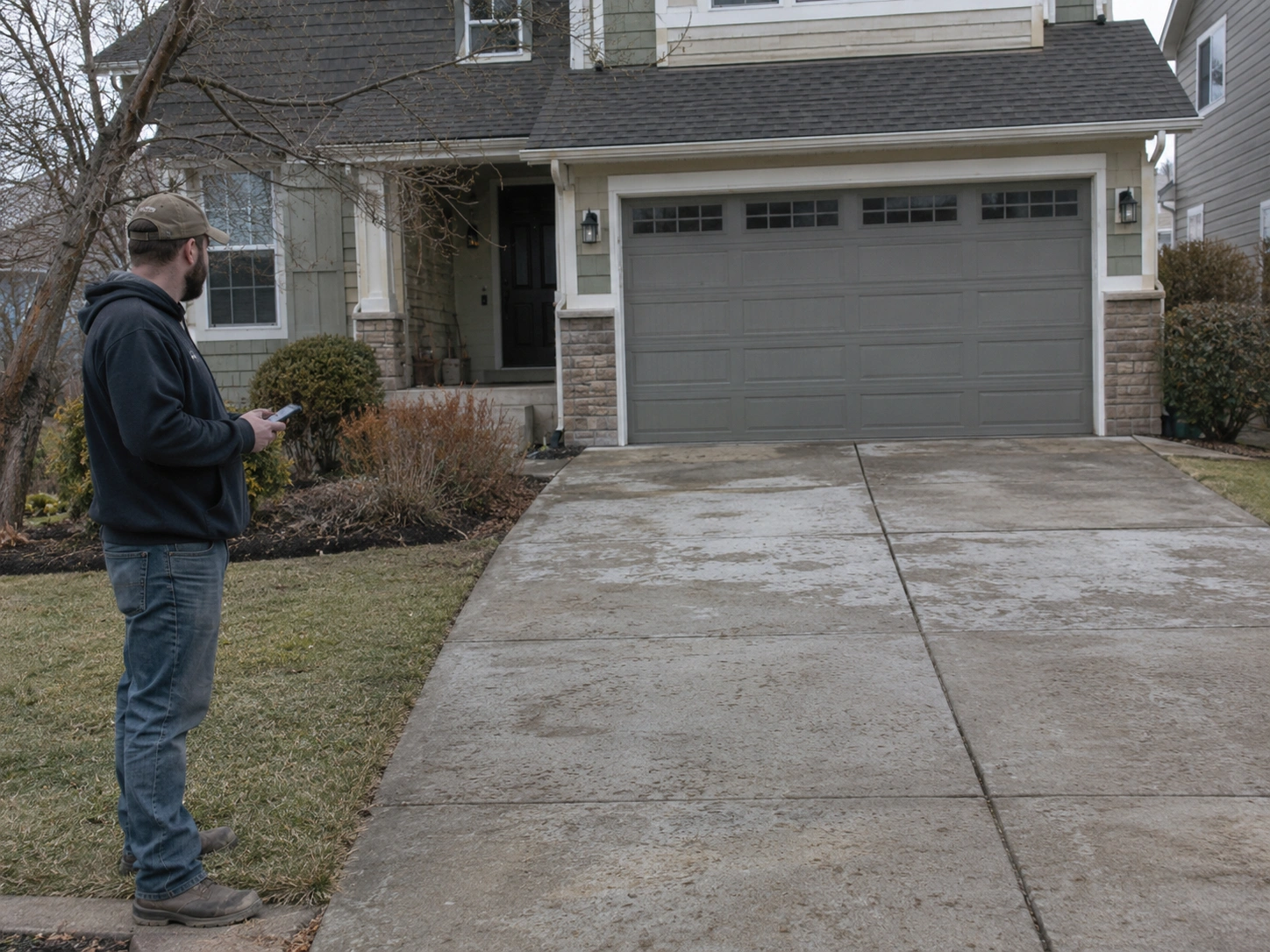
Before the truck shows up:
- Clear vehicles from the placement area and the route to it
- Unlock any gates that need it
- Double-check overhead clearance
- Confirm the exact spot you want it, and flag anything unusual about it in advance
- Keep kids and pets away from the delivery area
Whether a driver calls ahead, the exact delivery window, and whether you need to be present all come down to the provider — ask what they require before delivery day.
Load the Dumpster
Good loading habits:
- Stick to confirmed materialsDon't guess with anything hazardous or unclear.
- Spread the load outDistributing debris evenly avoids unstable piles that can shift in transit.
- Stay below the fill lineNot the container walls — the marked line.
- Watch weight, not just spaceA container can look far from full and already be at its limit.
A few things reliably cause problems at pickup: debris piled above the fill line, material hanging over the sides, prohibited items mixed in, a blocked access path, or someone climbing into the container to compact the load (the walls aren't built for that). Where a container is accessible to others, unauthorized items getting added is also worth watching for.
See the full prohibited & restricted materials guide · Read the full dumpster safety guide
Rental Period & Project Timing
Rental lengths vary by provider, so estimate realistically how long loading will actually take — delays happen. If you think you'll need more time, raise it early rather than the day of; extensions usually need advance coordination, not a same-day ask. And a short project doesn't automatically mean the price is just a fraction of the standard rental — confirm how your provider actually handles it.
See the full cost & pricing guidePickup & What Happens After
Before pickup:
- Stop loading once you're near the scheduled time
- Confirm debris is within the weight and fill limits
- Clear the access route and move anything blocking retrieval
- Check that no one else added anything questionable
- Let your provider know you're ready
Delayed or early pickup and unclear communication are common frustrations in this industry. Before booking, ask how pickup gets requested, what window to expect, whether you'll get advance notice, and what happens if pickup can't be completed — due to blocked access or an overweight load, for instance.
Once collected, the contents typically head to a landfill, transfer station, or recycling route depending on the material and local rules — exactly where a given provider takes debris is specific to them, not something stated here as a fact.
Learn how local disposal facilities work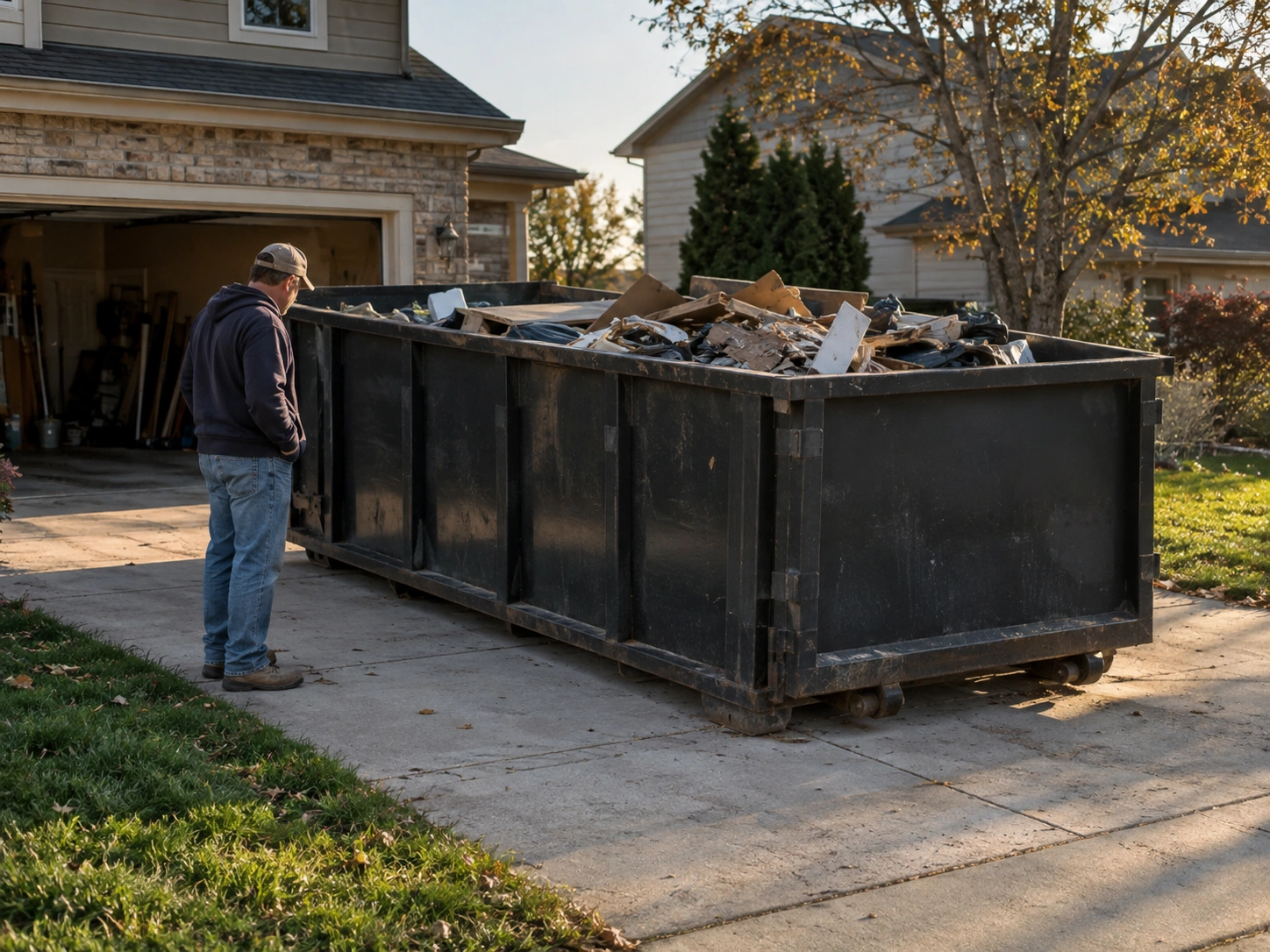
Common Process Problems & How to Avoid Them
- Wrong container sizeUnderestimating volume or weight before ordering.
- Unexpected heavy debrisNot planned for until it's already a problem.
- Unclear quote termsNot confirming what's included before booking.
- Blocked delivery areaVehicles or obstacles not cleared ahead of time.
- Low wires or branchesNot checked until delivery day.
- Prohibited materialsLoaded without confirming first.
- OverfillingRisks a delayed pickup.
- Needing more timeRaised too late to arrange easily.
- Pickup-access problemsRoute or container not reachable on pickup day.
Process Considerations Around Asheville
Residential renovations, contractor work, and yard or storm cleanup all come up regularly around Asheville, and driveway or access constraints on some properties make the placement and delivery steps above worth double-checking rather than assuming they'll be routine.
Dumpster Rental Process Questions, Answered
How does dumpster rental work?
You describe the project, pick a container, review the quote, arrange placement and delivery, load within the agreed limits, and schedule pickup. See the step-by-step breakdown above for the full picture.
What information do I need to rent a dumpster?
Project type, debris category, estimated volume, any heavy or questionable materials, timing, duration, and your placement location. The more of this you have ready, the more accurate the quote.
How long can you keep a dumpster?
Rental periods are usually set for a specific number of days and vary by provider, with the option to extend. Confirm the included window and extension process before booking.
Do I need to be home when a dumpster is delivered?
Depends on the provider — some want someone on-site to confirm placement, some don't. Ask directly rather than assuming either way.
Where can a dumpster be placed?
Most often on private property like a driveway. Placement on a public street or right-of-way is sometimes possible but usually involves separate permit rules — see the placement guide.
Can a dumpster fit in my driveway?
Usually, but the delivery truck needs more room to maneuver than the container's own footprint suggests. Measure your space ahead of time to avoid a surprise on delivery day.
How high can I fill a dumpster?
Up to the fill line marked on the container, not the top edge. Going over it is one of the most common reasons a pickup gets delayed — the load has to come down to the line before the truck can safely take it, so it's worth checking before you call for pickup, not after the truck is already there.
What happens if the dumpster is too heavy?
You may face an overage charge, and in some cases the load has to come down before it can be transported at all. Confirm your weight allowance before loading anything dense.
How do I request pickup?
Varies by provider — call, text, or an online request are all common. Confirm the process, the expected window, and whether you'll get advance notice when you book.
Do I need a permit for a dumpster?
It can depend on where it sits — private property and public streets are often treated differently. Confirm current requirements with the appropriate local authority before scheduling delivery.
Ready to Walk Through Your Project?
Tell us the project type, debris, rough volume, timing, and placement details, and we'll help you work through it.