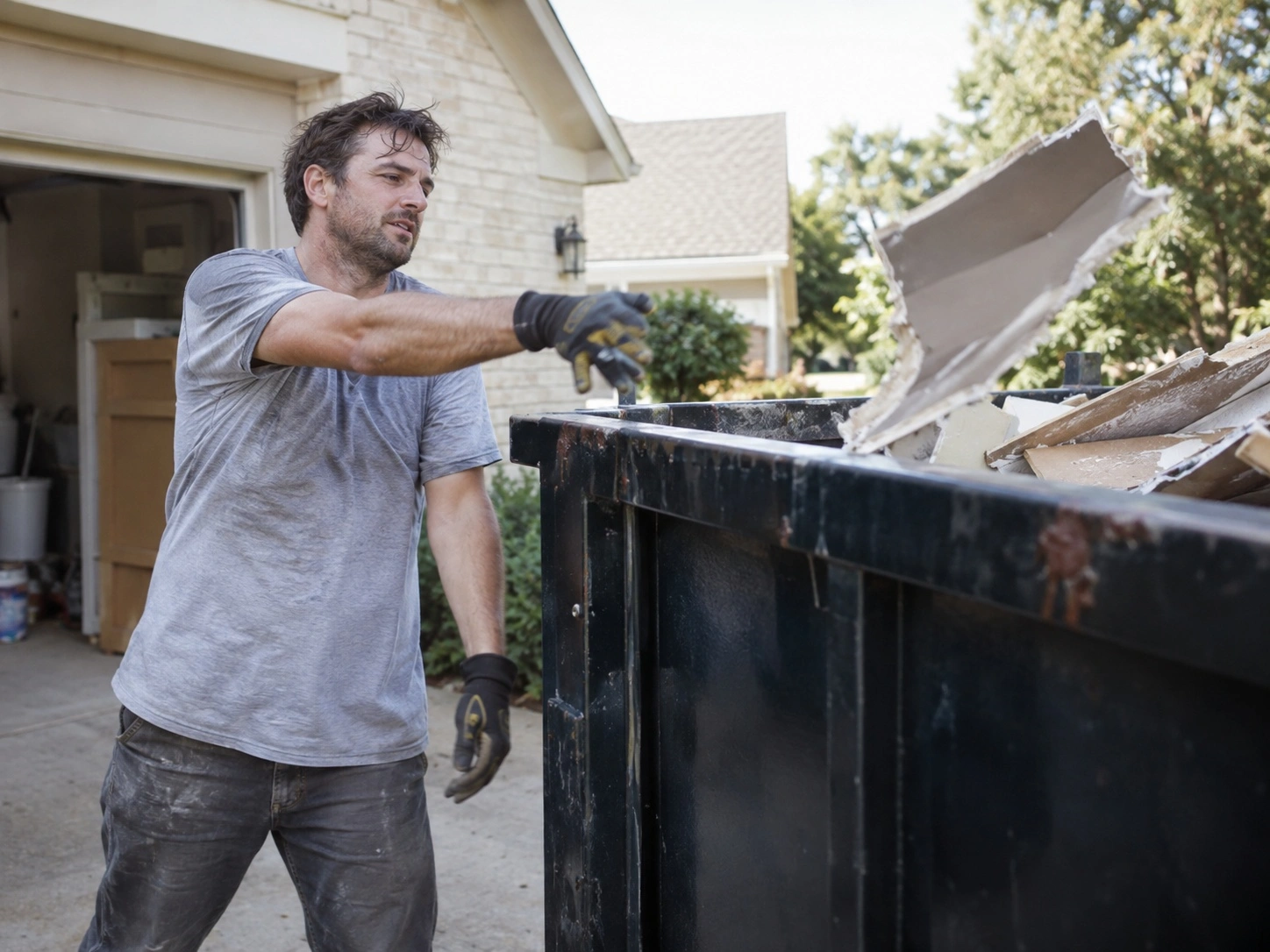
Residential Dumpster Rental
For homeowners tackling a single project — a garage clear-out, a small remodel, or general household debris.
Residential dumpster rental
Planning a renovation, cleanout, or construction project in the Asheville area? Get help matching your project to the right roll-off dumpster size, understand what typically affects rental cost, and request a straightforward quote.
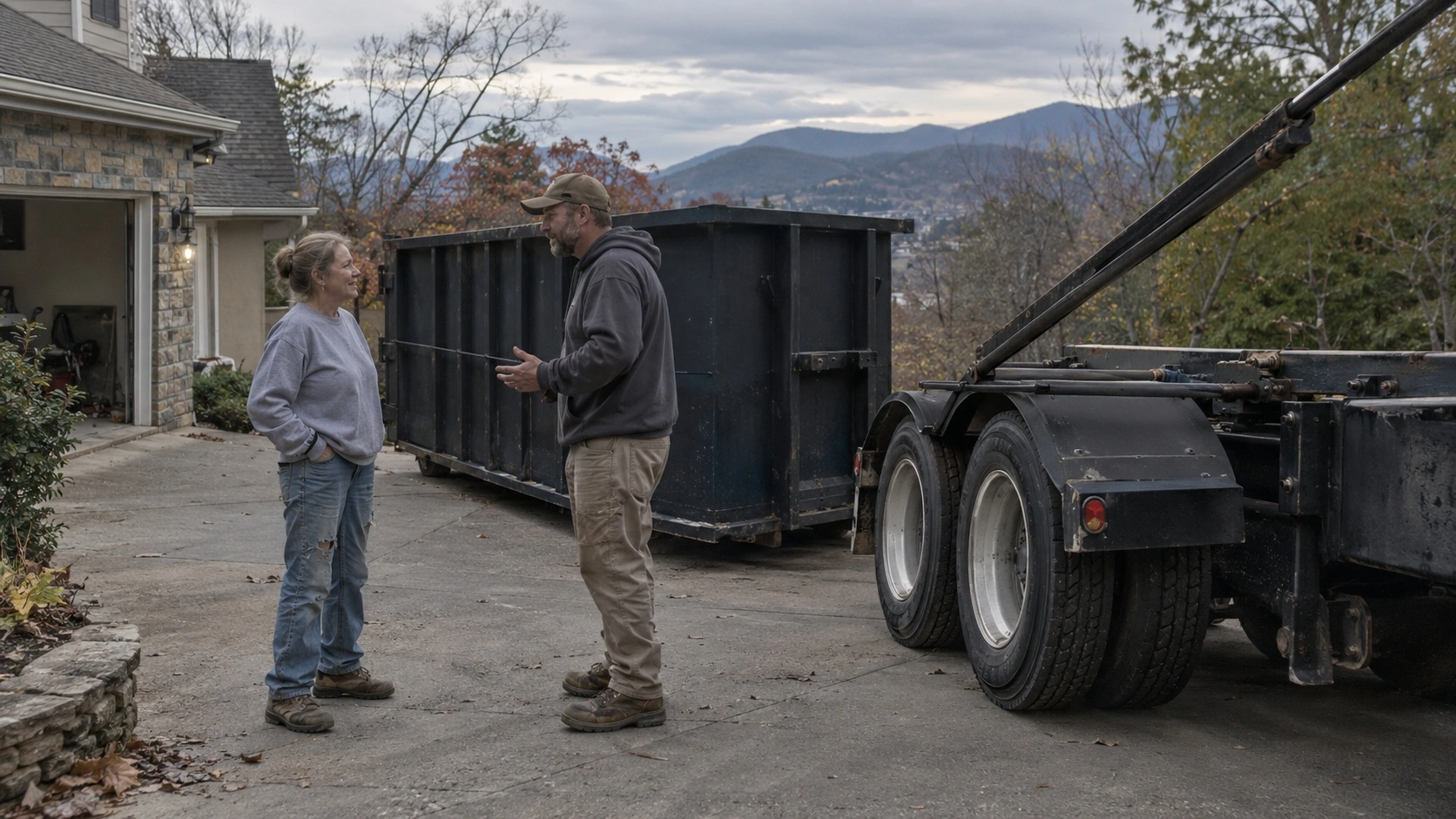
Clear information to help you match your project to an appropriate container size before you request a quote.
A simple, step-by-step explanation of how booking, delivery, and pickup typically work.
Placement, access, and local-context guidance written specifically for Asheville-area projects.
Tell us about your project and get a quote request started without confusing back-and-forth.
Whatever the project, the right container depends on the type and amount of debris involved. Here's how these common Asheville project types typically differ.
For homeowners tackling a single project — a garage clear-out, a small remodel, or general household debris.
Residential dumpster rental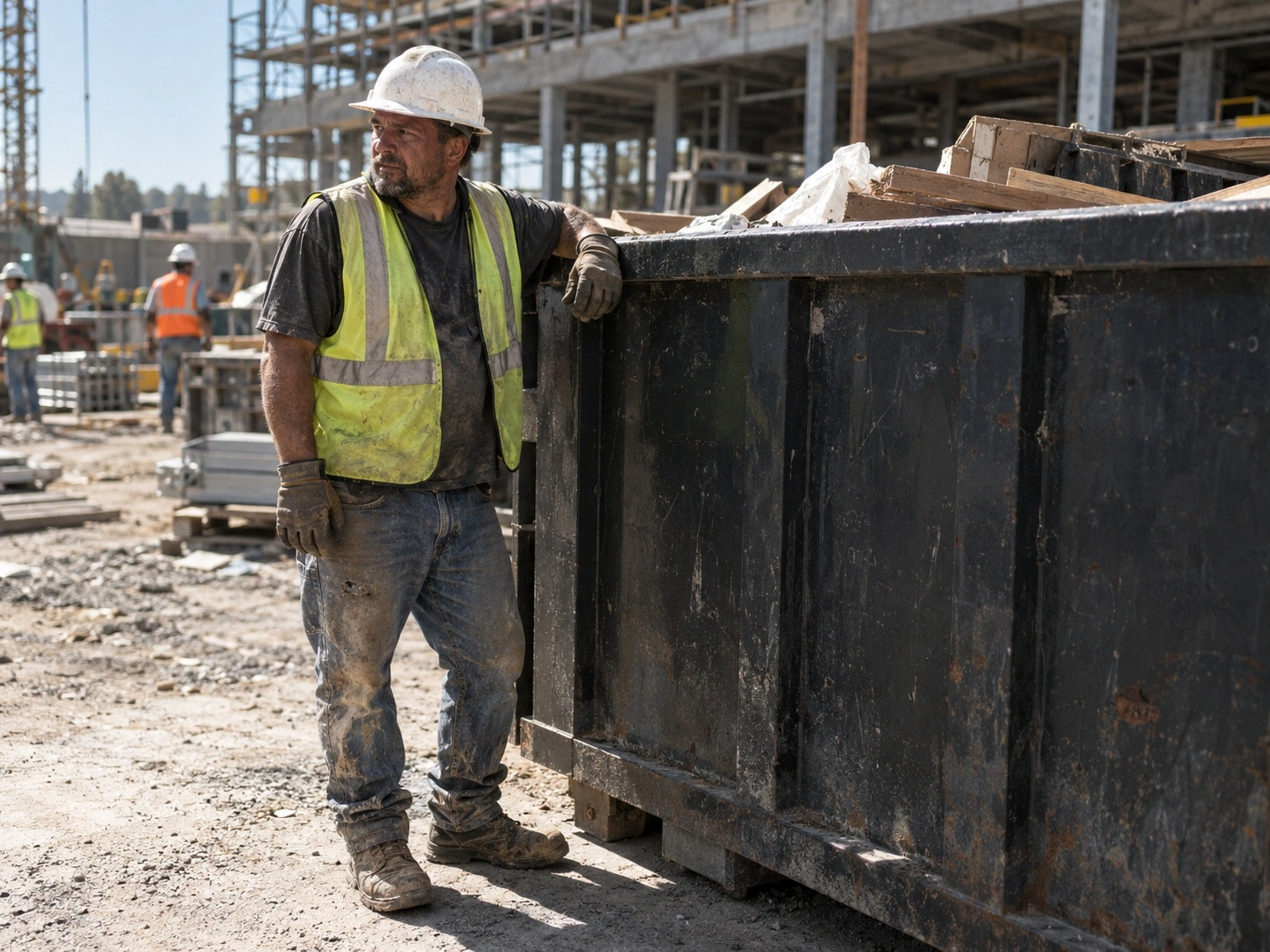
For contractors, property managers, and businesses that need reliable debris removal across a project or job site.
Commercial & contractor dumpster rental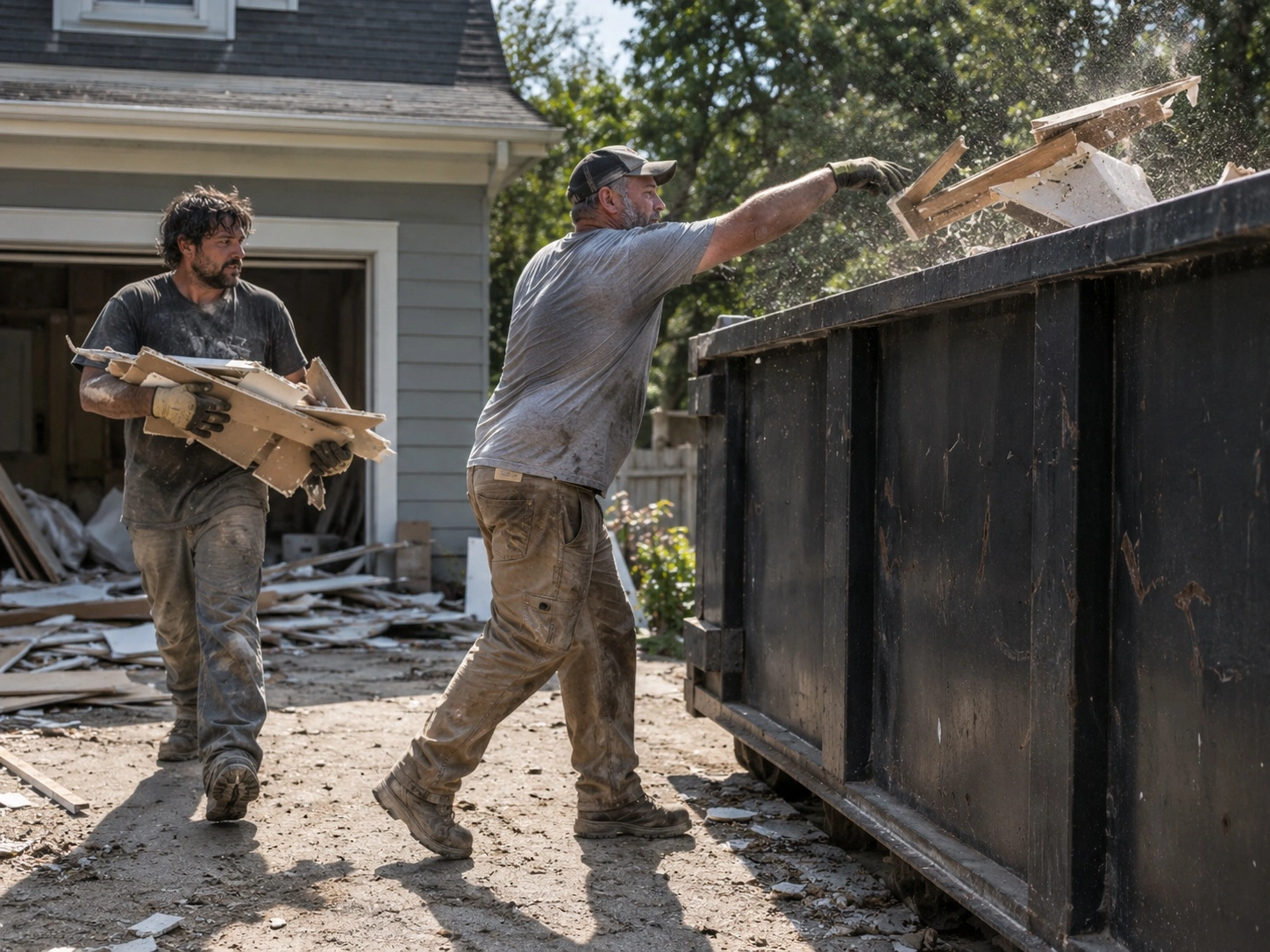
For remodels, additions, and new-build projects generating framing, drywall, roofing, and other renovation debris.
Construction & renovation dumpster rental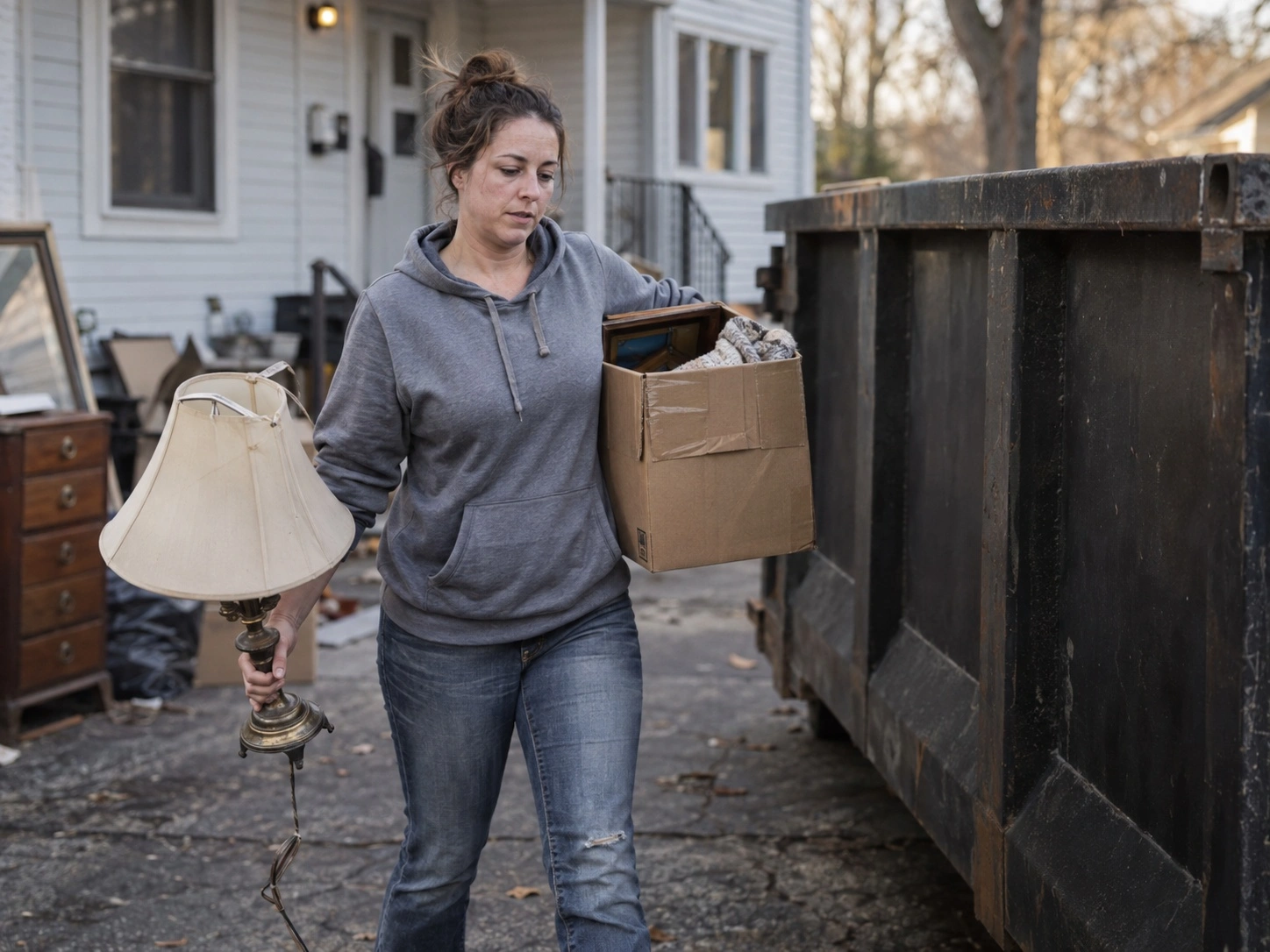
For full-house cleanouts, estate cleanouts, and property turnovers where volume — not just debris type — is the main factor.
Home & property cleanouts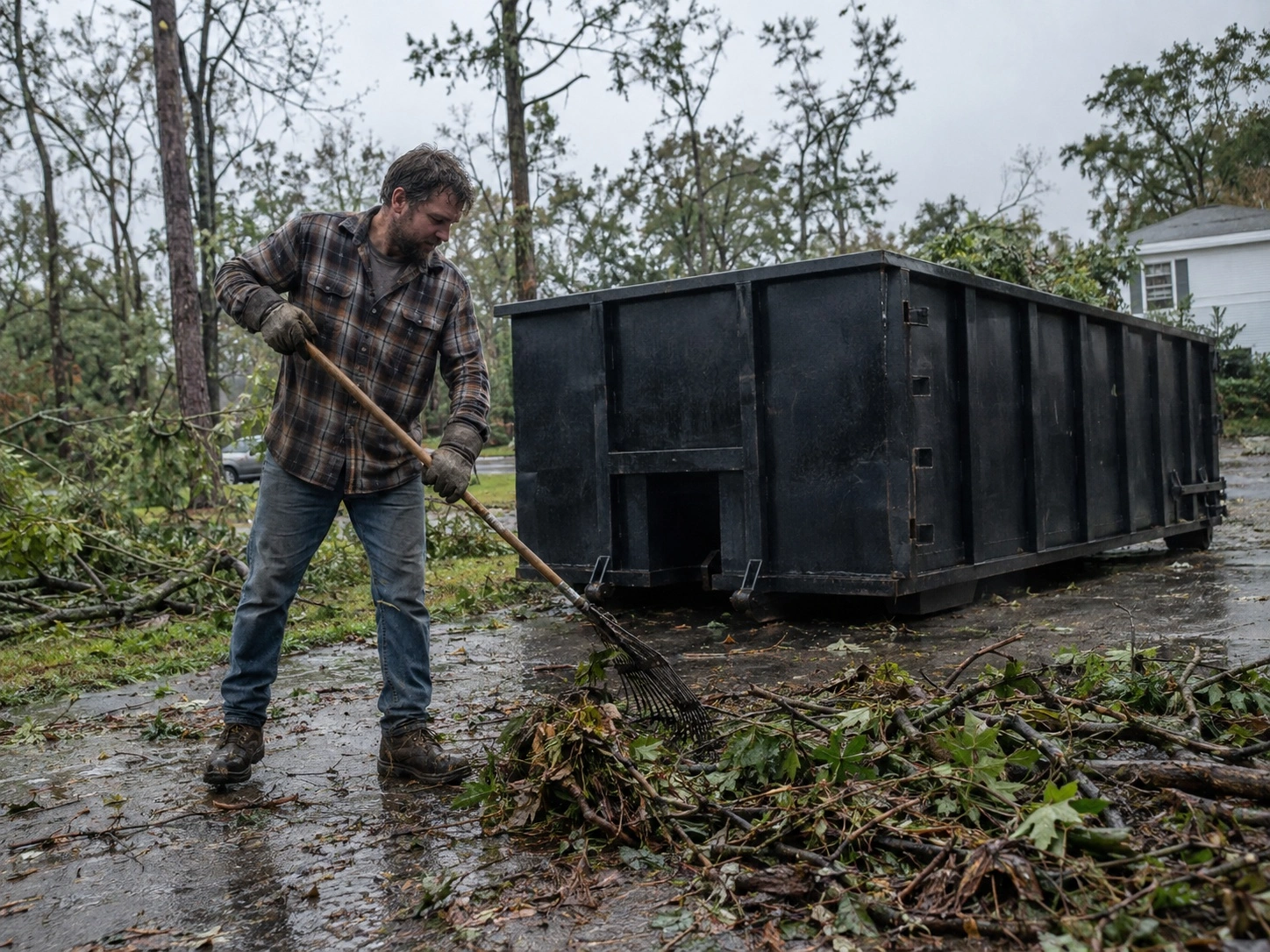
For tree limbs, brush, and seasonal yard cleanup — including debris left behind after storms in the Asheville area.
Yard waste & storm debris removalThere isn't a single "right" size for every project. The correct container depends on a combination of factors, and getting it wrong in either direction usually costs you — either through a second container or wasted capacity you paid for.
Common roll-off sizes range from smaller 10-yard containers up to larger 30- or 40-yard units, though not every size is available from every provider — confirm availability when you request a quote.
See the full dumpster size guide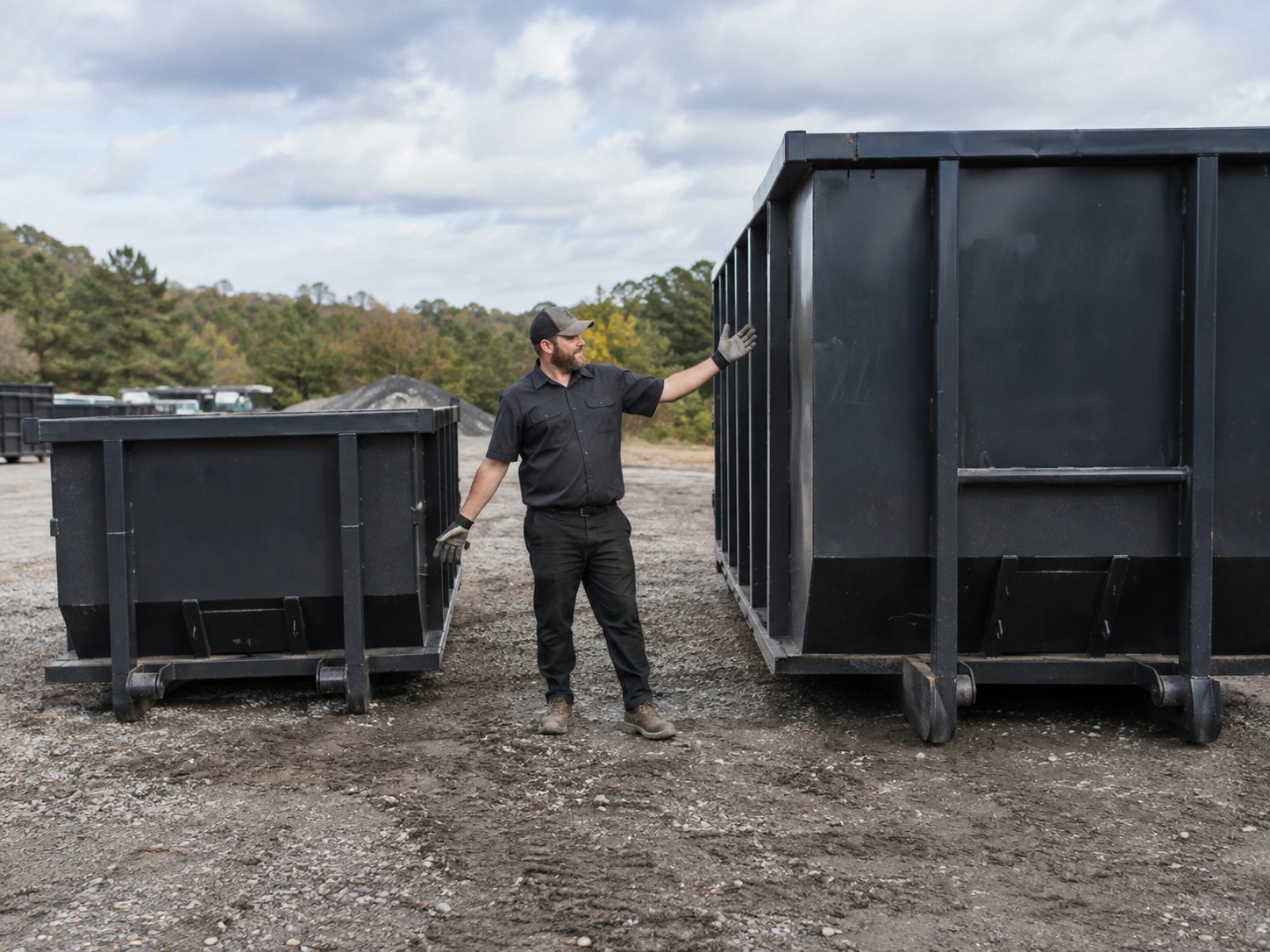
Dumpster rental pricing isn't one flat number — it's built from several variables that change from project to project. Understanding them ahead of time helps you avoid surprises.
Larger containers generally cost more than smaller ones, but the right size can still be cheaper than needing a second small one.
Most rentals include a set number of days, with additional charges possible if you need the container longer.
Heavier materials like shingles, dirt, or concrete are priced differently than typical household debris.
Quotes typically include a set weight allowance before an overage rate applies.
Distance, access, and scheduling can factor into the total cost of a rental.
Fees tied to the local landfill or transfer station are often built into the overall price.
Exact pricing varies by provider, so treat these as factors to ask about — not fixed numbers. See the full cost & pricing guide.
The general process is similar across most providers, though exact details vary. Here's the general flow.
Share the project type, estimated debris, and timeline so the right size can be recommended.
Match the project to an appropriate size based on volume, material, and available space.
Confirm where the container will sit and whether the location is accessible for delivery.
Fill the container within its weight limit and fill line, keeping restricted materials out.
Arrange pickup once loading is complete or your rental period is ending.
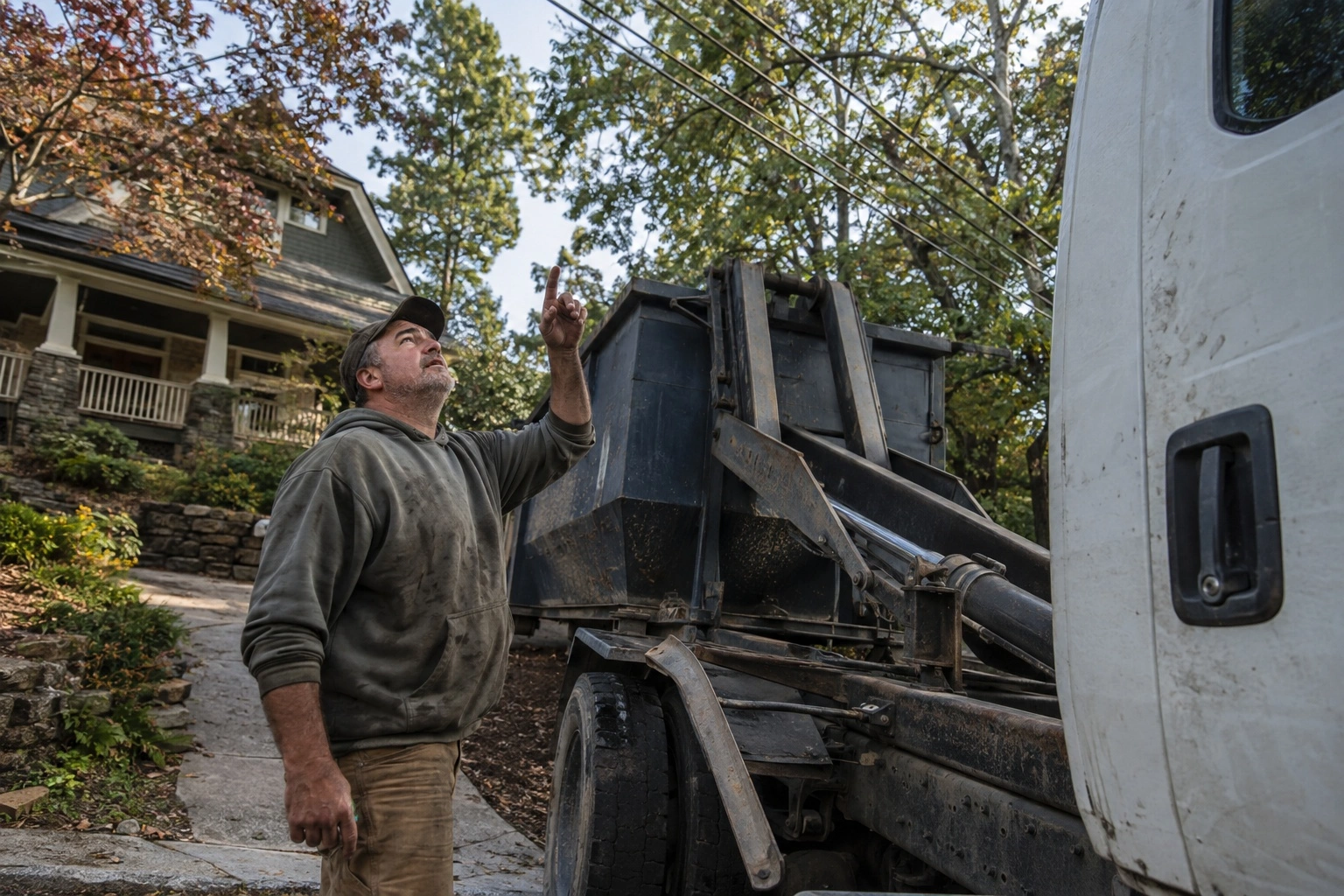
Placement is one of the most common practical hurdles, especially on the tighter lots and sloped driveways found throughout parts of Asheville. Before scheduling delivery, it's worth checking:
Most standard household and construction debris is fine, but restrictions apply to hazardous and specialty materials — and exactly what's restricted can vary by material type and by local disposal facility rules.
Restrictions vary by provider and by local disposal rules, and those rules can change. If you're unsure whether something can go in a dumpster — paint, batteries, electronics, or anything unknown — confirm before loading it rather than guessing.
Asheville's mix of older housing stock, ongoing renovation activity, and mountain terrain creates some project conditions that are worth planning around. Common situations locally include:
These are practical planning factors, not guarantees of service or availability — confirm specifics for your property when you request a quote.
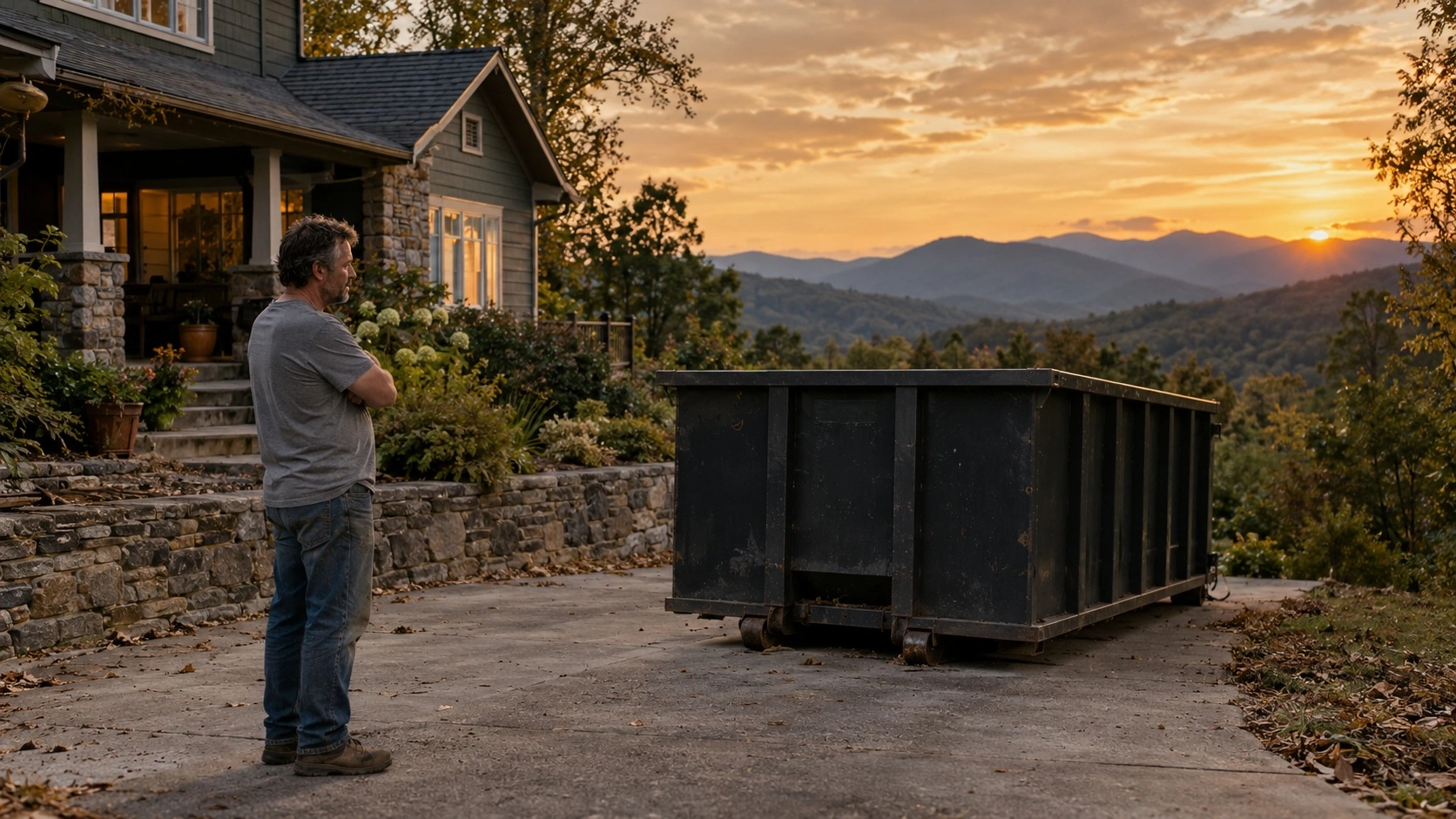
A dumpster isn't always the most efficient choice. Depending on the amount of debris, your ability to load it, and your timeline, a different option might make more sense.
Repeated trips to the dump can work for small amounts of debris. Whether a single on-site container is more cost-effective depends on debris volume, your vehicle, number of trips required, and the value of your time.
Junk removal includes labor to haul items away for you, while a dumpster rental leaves loading to you. Which is more cost-effective depends on debris volume, labor, timing, and provider pricing.
Smaller debris bags or a trailer can be a reasonable fit for light-volume projects that don't justify a full roll-off container.
Cost depends on the container size, rental duration, debris type, and how much weight is included before overage fees apply. Because pricing varies by provider and project, the most accurate number comes from requesting a quote with your specific details. Our cost factors guide covers this in more depth.
It depends on how much debris you're removing, what kind of material it is, and how much space you have for placement. A small bathroom remodel typically needs far less capacity than a full home cleanout or construction project. Our size guide walks through how to match project type to size range.
Rental periods vary by provider and are usually set for a specific number of days, with the option to extend if you need more time. Confirm the included window and any daily extension rate before booking so it matches your project timeline.
Most rentals restrict hazardous and specialty materials such as paint, solvents, fuels, batteries, tires, and certain electronics or appliances. Exact restrictions can vary by provider and local disposal facility, so confirm before loading anything questionable. See our prohibited materials guide.
It depends on how much debris you have, how many trips it would take, your vehicle, and the value of your own time. A few small loads can be more cost-effective as DIY runs, while larger cleanouts or renovation debris may be more efficient with a single on-site container — it varies by volume, transport, and timing. See our comparison guide.
Dumpster rental can be more cost-effective when you're able to load debris yourself over a few days, while junk removal includes labor to haul it away for you. Which is more cost-effective depends on debris volume, labor, transport, timing, and provider pricing.
Permit requirements can depend on where the container is placed — private property is typically treated differently than a public street or right-of-way. Because local requirements can change, confirm current rules with the City of Asheville or Buncombe County before scheduling delivery. See our permit & placement guide.
Most roll-off dumpsters need a reasonably flat, hard surface with enough clearance for the delivery truck to maneuver, plus overhead clearance from branches or wires. Measuring your available space ahead of time helps avoid delivery issues — see our placement guide for what to check.
Safe loading matters as much as choosing the right size. Keeping debris below the fill line, separating restricted or hazardous materials, and understanding where waste actually goes after pickup all reduce risk and help avoid disposal problems.
Read the dumpster safety guide · Learn how local disposal facilities work
Our primary service focus is Asheville, NC. Surrounding Western North Carolina communities may be considered on a case-by-case basis as service area details are finalized — confirm coverage for your specific location when requesting a quote.
Tell us what you're working on and we'll help you figure out the right next step.