
Home & Property Cleanout Dumpster Rental in Asheville, NC
Clearing out a house, garage, or property often means dealing with more volume than a few trips to the dump can reasonably handle. A dumpster gives you one place to put things as you sort through them, at a pace that works for you.
- Planning guidance for estate, moving, and full-property cleanouts
- How to think through container capacity before you start
- What to sort out before it goes in the container
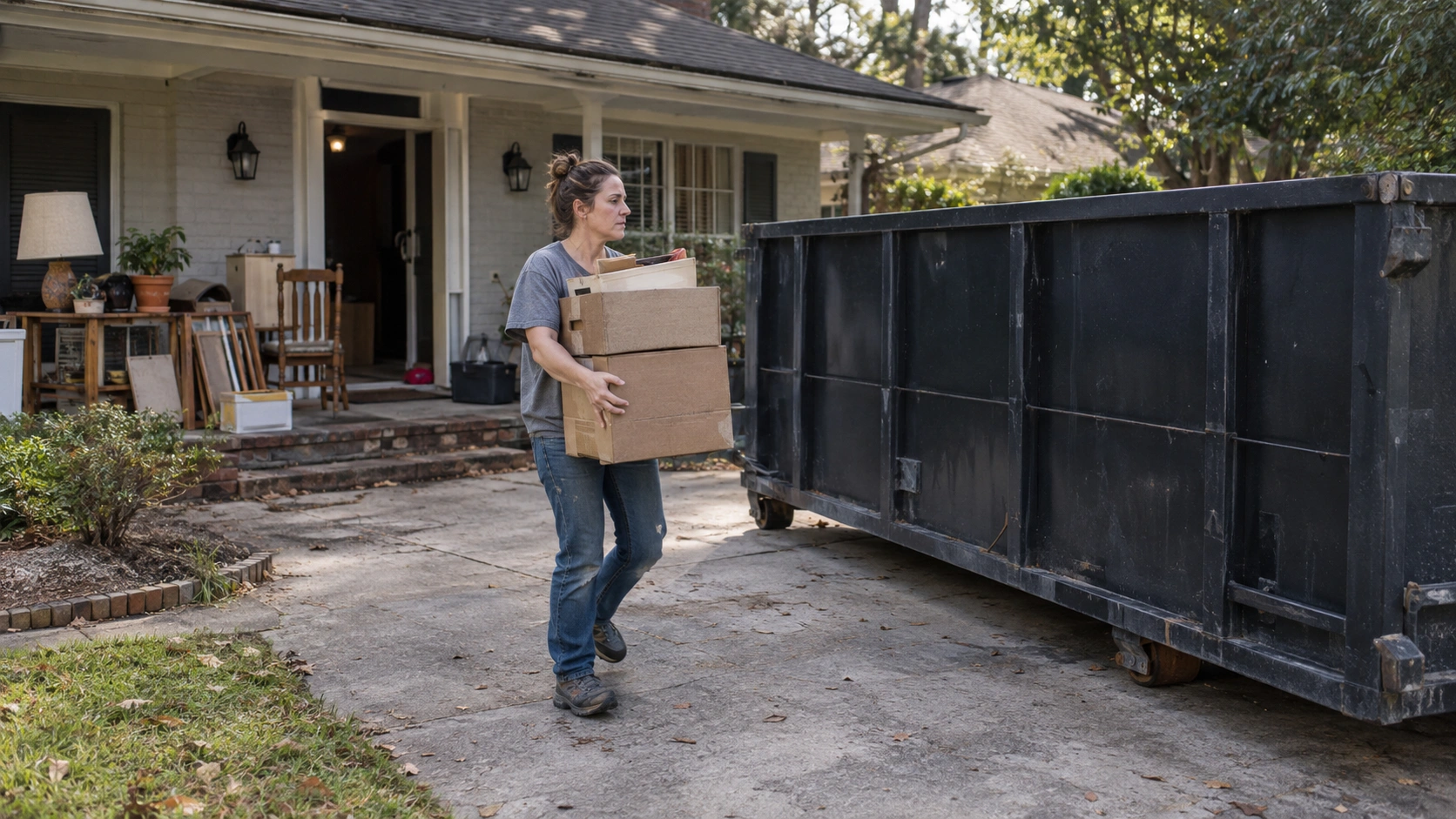
Cleanout Projects That May Benefit From a Dumpster
Cleanouts come in a lot of forms — here are some of the most common:
Whole-home cleanout
Garage cleanout
Basement cleanout
Attic cleanout
Moving
Downsizing
Estate cleanout
Rental-property turnover
Decluttering before a renovation
Not everything from a cleanout can go into the same container — furniture, general household items, and anything hazardous or questionable all need to be handled a little differently.
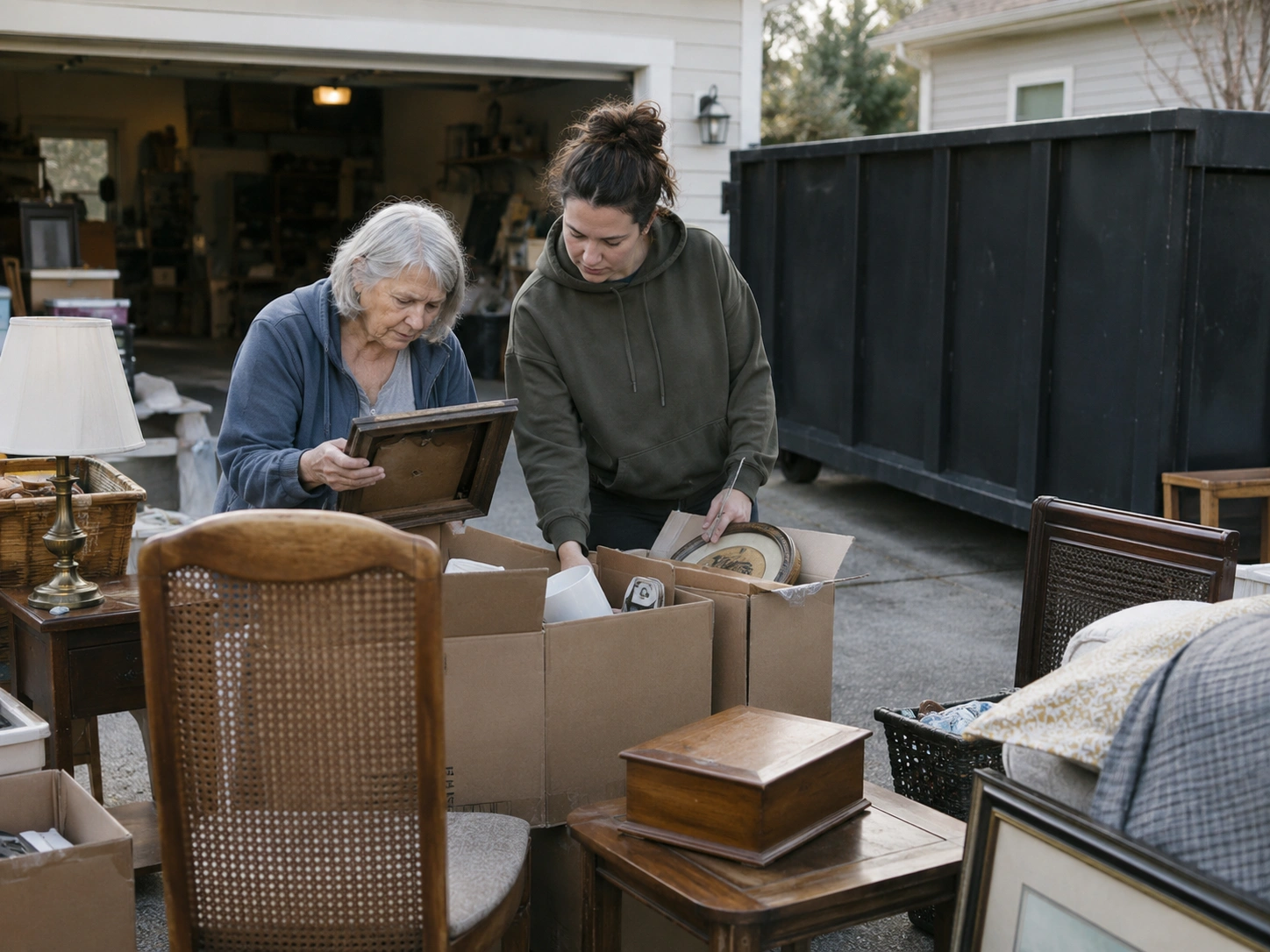
Clearing a Property After a Family Transition
Clearing a home after a family transition is rarely just a logistics project — it often means going through a lifetime of belongings, usually on a timeline that isn't entirely up to you. A dumpster can help with the volume, but it works best alongside a bit of a plan.
- Take it in stagesSorting room by room tends to go more smoothly than loading everything at once.
- Set items aside for donation or reuseFurniture, clothing, and household goods in decent condition may be worth donating rather than discarding.
- Separate what can be recycledMetal, some furniture components, and other materials may have a recycling option worth checking.
- Identify anything that shouldn't go in a normal dumpsterOld chemicals, paint, batteries, or unknown containers are common finds in long-occupied homes.
- Work at a manageable paceA multi-day rental window can make it easier to sort thoughtfully instead of rushing.
Every estate situation is different, and there's no single right way to approach one — these are simply practical starting points for the disposal side of the process.
Clearing Out Before a Move or a Smaller Space
Moving and downsizing both tend to surface things that have accumulated for years — furniture that won't fit the new place, household clutter, and items from storage areas that haven't been opened in a while.
- Accumulated belongingsBoxes and storage items that need a final decision — keep, donate, or discard.
- Unwanted furniturePieces that won't make the move or don't fit a smaller space.
- Household clutterEveryday items that have built up and are easier to clear all at once.
- Storage area clear-outsClosets, sheds, and other spaces that tend to get emptied all at once during a move.
A dumpster tends to make sense when you're comfortable loading over a few days at your own pace. If you need help with the physical labor of loading and hauling, junk removal may be a better fit — see our comparison guide to weigh the two.
Garage, Basement & Attic Cleanouts
These spaces tend to accumulate things other rooms don't — and sometimes items that need a closer look before they go in a dumpster.
- Bulky objectsOld furniture, sporting equipment, and large household items that take up real space.
- Old household goodsItems that have been stored for years and are ready to go.
- Stored paint or chemicalsCommon in garages and basements — these typically need separate disposal.
- Batteries & electronicsOld devices and batteries that shouldn't go in with general debris.
- Sharp objectsTools, broken glass, or metal that need careful, deliberate handling when loading.
- Unknown containersUnlabeled or unfamiliar containers found in storage areas — confirm contents before disposing of them.
- Moisture or mold-affected itemsBelongings damaged by dampness or mold may need extra care in handling — when in doubt, treat them cautiously rather than assuming.
How Much Space Do You Need for a Cleanout?
Cleanout debris is often a mix of bulky and compact material, which can make volume harder to estimate than it looks at first glance.
- Cubic-yard capacityContainer size is measured in cubic yards — a measure of volume, not weight.
- Furniture fills space quicklyCouches, mattresses, and large furniture take up disproportionate room compared to their weight.
- Bagged material behaves differentlyBagged household items pack more efficiently than bulky, irregular objects.
- Dense material adds weight, not just volumeOld tile, books, or dense storage items can affect weight limits even in a partly-empty container.
Not every provider stocks every size, so confirm availability for your specific cleanout when you request a quote.
See the full dumpster size guideDumpster Rental vs. Junk Removal vs. Dump Runs
There's no single right answer for every cleanout — it depends on volume, your ability to load, and your timeline.
Dumpster Rental May Fit When...
You're able to load items yourself, the project spans several days, debris accumulates gradually, and you have suitable placement space.
Junk Removal May Fit When...
You need labor to do the loading, the amount is more modest, or you'd prefer everything gone quickly in one visit.
DIY Dump Runs May Fit When...
The amount is limited, you have a suitable vehicle or trailer, and the time and transport involved is manageable for you.
None of these is universally cheaper — it depends on your specific volume, labor needs, and timing. Compare your options in detail.
Items That May Need Special Handling
Cleanouts commonly turn up materials that need separate handling rather than going in with general debris:
Paint
Household chemicals
Fuel & oil
Propane containers
Batteries
Electronics
Tires
Refrigerant-containing appliances
Sharps & medical waste
If a cleanout involves any demolition or building material — for example, removing a wall or old flooring — older buildings can also contain materials like asbestos or unknown building products. Exact restrictions vary by provider and local disposal facility, so confirm before loading anything questionable rather than guessing.
Planning Placement for a Cleanout
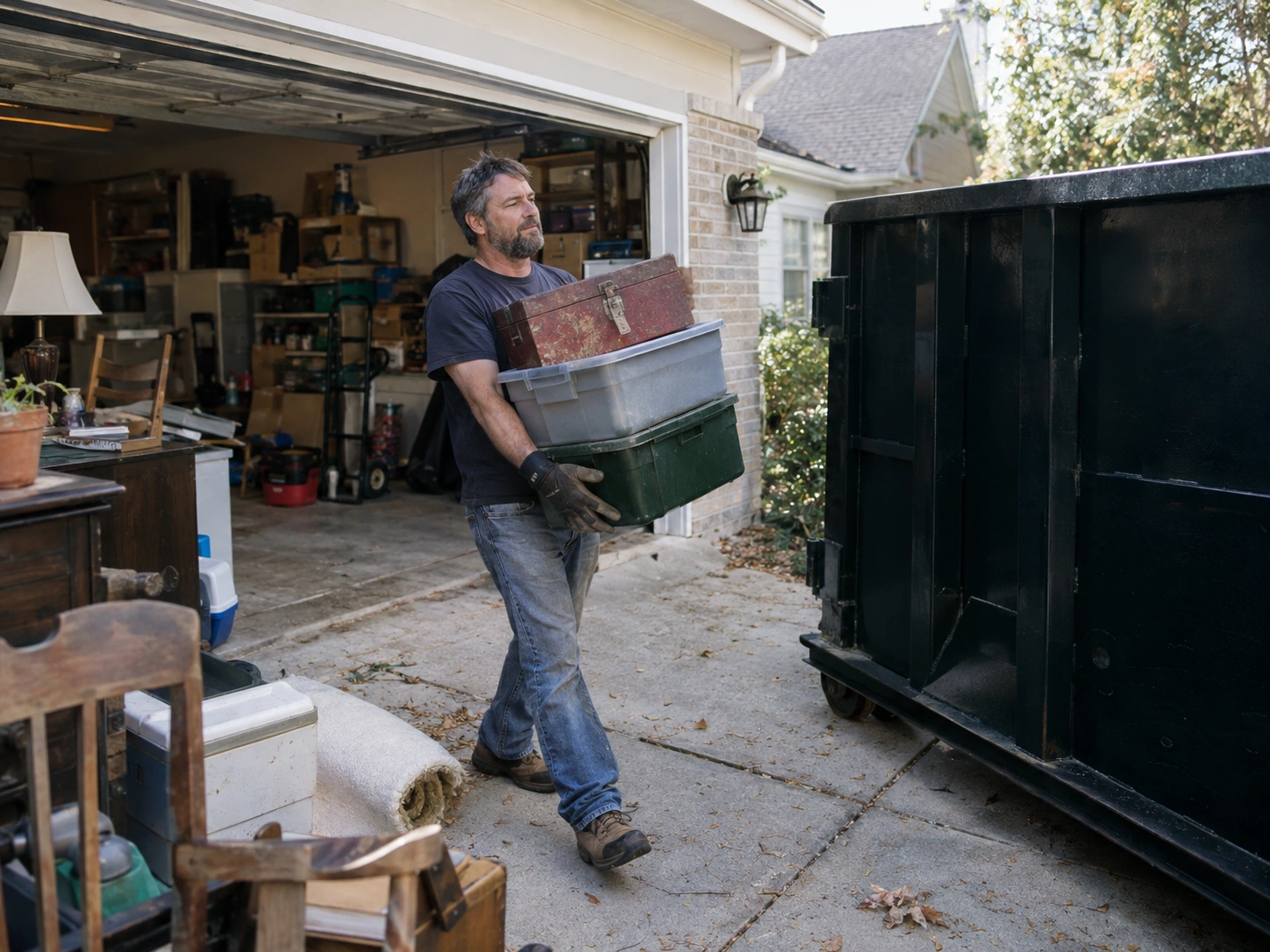
Where the container sits affects how easy the cleanout itself will be — worth checking before delivery:
- Driveway spaceEnough room for the container without blocking your own access.
- Access from the house or garageA short, clear path makes repeated trips to the container much easier.
- Keeping vehicles clearCars that may need to move before delivery or during loading.
- Truck accessRoom for the delivery truck to approach and place the container.
- Overhead obstaclesLow branches or wires that could interfere with placement.
- Stable surfaceA flat, hard surface is generally preferred over soft or sloped ground.
- Walking distancePlacing the container reasonably close to where most of the cleanout is happening saves a lot of back-and-forth.
What Affects Cost for a Cleanout
Pricing for a cleanout depends on a combination of factors rather than one flat rate.
Container Capacity
Larger containers generally cost more, though the right size can be more economical than needing a second one.
Rental Duration
Most rentals include a set number of days, with a possible extension charge for a longer cleanout.
Material Type
Bulky furniture and general household items are often priced differently than dense material.
Weight
Quotes typically include a set weight allowance before an overage rate applies.
Disposal Charges
Fees tied to the local landfill or transfer station are often built into the overall price.
Delivery & Pickup
Distance and access at your property can factor into the total cost.
A Practical Cleanout Plan
A little upfront sorting makes the whole process go more smoothly.
Identify what stays
Decide what you're keeping before deciding what needs to go.
Separate donation & reuse items
Furniture, clothing, and goods in decent condition may be worth donating.
Identify recyclables
Metal, cardboard, and other recyclable material worth pulling out separately.
Isolate hazardous or questionable items
Paint, chemicals, batteries, and unknown containers set aside for separate handling.
Estimate remaining volume
What's actually left to go in the container, once the above is set aside.
Choose a placement area
Somewhere close to the work with clear truck access.
Keep the loading path clear
Make repeated trips easier by keeping a clear route to the container.
Avoid overfilling
Keep debris at or below the marked fill line.
Confirm anything uncertain
Check before loading questionable materials rather than guessing.
Property Cleanouts Around Asheville
Cleanouts in the Asheville area come up for a lot of reasons — moving, downsizing, rental turnover, and preparing a property for renovation or sale among them. A few common local themes:
- Moving and downsizing cleanouts tied to relocation within or out of the area
- Rental-property turnover between tenants
- Property preparation ahead of a renovation or listing
- Storm-related household debris in properties affected by regional weather events
- Access constraints at some properties due to sloped lots or tighter driveways
These are practical planning themes, not guarantees of availability at a specific property — confirm the details for your property when you request a quote.
Cleanout Dumpster Rental Questions, Answered
What size dumpster do I need for a home cleanout?
It depends on how much you're clearing out and what kind of material it is — a single room needs far less capacity than a whole-house or estate cleanout. Our size guide walks through how to think it through.
Can I put furniture in a dumpster?
Generally yes — furniture is common cleanout debris. Keep in mind that bulky pieces take up space quickly, so factor larger furniture into your size planning rather than an afterthought.
Can I put electronics in a dumpster?
Electronics often require separate handling rather than general disposal, depending on the provider and local disposal facility rules. Confirm before loading TVs, computers, or other devices. See our materials guide.
How long can I keep a dumpster during a cleanout?
Rental periods vary by provider and are usually set for a specific number of days, with the option to extend for a longer cleanout. Confirm the included window and any extension rate before booking.
Is a dumpster cheaper than junk removal?
It depends on debris volume, whether you can load it yourself, and provider pricing. Dumpster rental can be more cost-effective when you're able to load over a few days, while junk removal includes labor to do it for you. See our comparison guide.
Is it cheaper to make dump runs myself?
For a small amount of debris with a suitable vehicle, DIY dump runs can be more cost-effective. For larger cleanouts, the time and number of trips required often make a single on-site container more practical.
Can a dumpster fit in my driveway?
Most residential driveways can accommodate a dumpster, but the delivery truck also needs room to maneuver, plus overhead clearance. See our placement guide for what to check.
What should I do with paint, chemicals, or batteries during a cleanout?
These typically need separate disposal rather than going in with general debris. Set them aside during sorting and confirm the correct disposal route before your cleanout is finished — don't leave it as an afterthought.
How do I get rid of a large amount of household junk at once?
A dumpster rental is a common option when you have more than a curbside pickup can handle and want to load at your own pace. Sorting first — donations, recycling, and questionable items — makes the process considerably more manageable.
Planning a Cleanout?
Tell us about the property and what you're clearing out, and we'll help you think through sizing and next steps.
Looking for general residential dumpster information instead? See our residential dumpster rental page.