Dumpster Safety Guide
Using a dumpster safely comes down to a handful of practical habits around delivery, loading, and pickup. The right approach for your situation depends on your container and provider's own instructions, the material involved, and your site conditions — this guide covers the general principles that apply across most projects.
How Do You Use a Dumpster Safely?
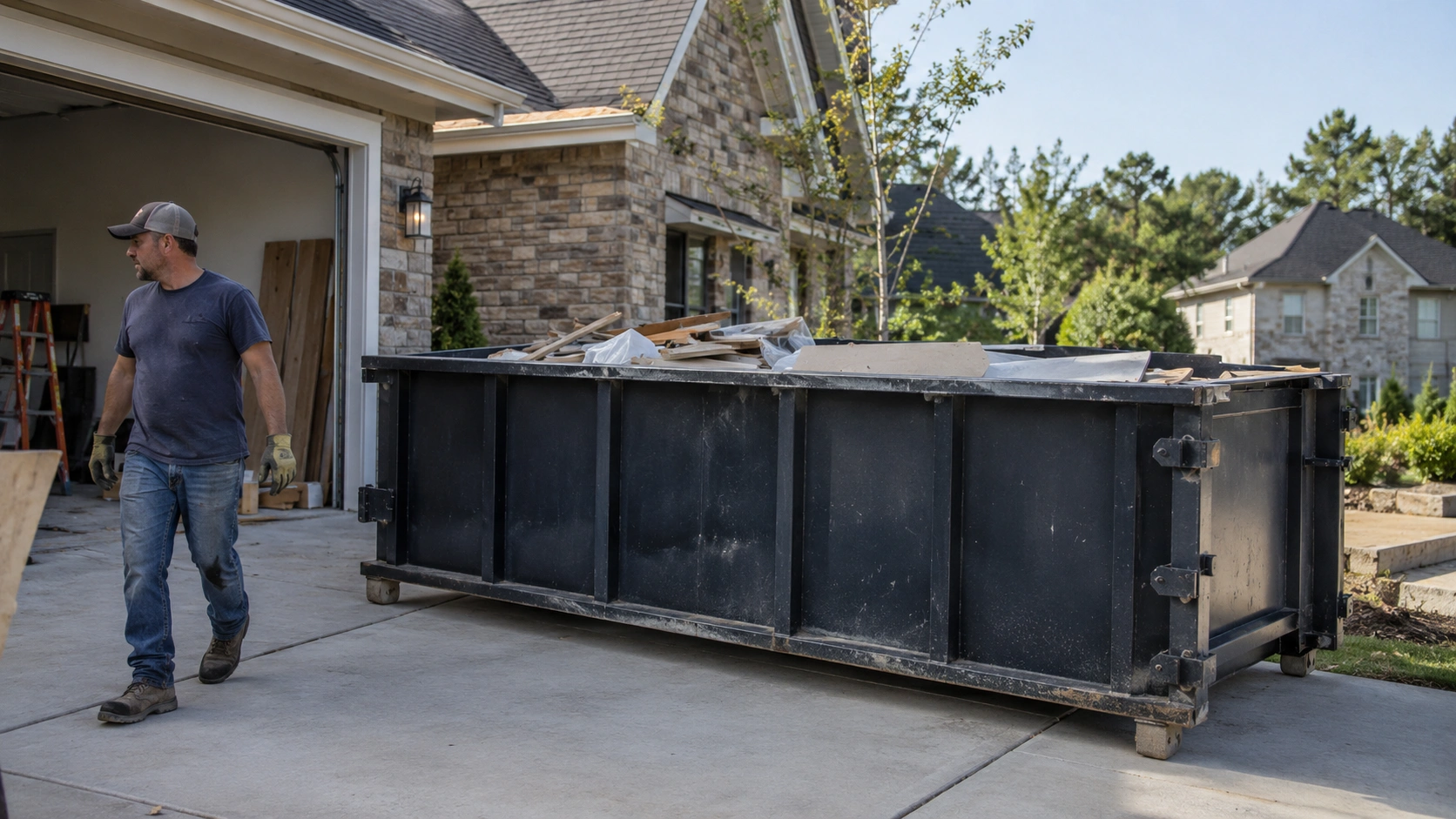
Keep people clear of the delivery and pickup equipment, place the container on a stable and accessible surface, and load only material you've confirmed is appropriate. Avoid unstable or protruding debris, respect your container's fill and weight limits, and keep children and pets out of the work area entirely. If you run into anything hazardous, electrical, structural, or unidentified, stop and get professional or authority help rather than handling it yourself.
Safety Starts Before Delivery
A little planning before the container arrives prevents most problems:
- A suitable, stable placement area
- A clear vehicle route to that area
- Overhead clearance from branches and wires
- Checked slope and surface condition
- Gates opened or unlocked if access requires it
- Vehicles moved out of the way
- A plan for how the container fits into an active work zone
- Whether placement involves public space, not just your own property
Delivery & Pickup Safety
Both ends of the rental involve large, heavy equipment maneuvering close to your property — the habits that keep people safe are the same both times.
During Delivery
Stay out of the active delivery area, and keep children and pets well away. Don't stand behind or beside the truck or container while it's being positioned, and don't try to reposition it yourself — follow your driver's instructions about where it's safe to stand.
Before Pickup
- Stop adding debris ahead of time
- Check for protruding or unstable material
- Clear the access route and move vehicles out of the way
- Keep people and pets away from the pickup area
- Tell your provider about any questionable condition beforehand
Don't attempt to manually move the container yourself at either point. See the full rental process guide
Safe Loading Limits & Weight Awareness
Load only material that's been confirmed as appropriate — this comes up most with paint, chemicals, batteries, fuels, propane cylinders, electronics, tires, appliances, unknown containers, suspected asbestos, and medical or sharps waste. See the full prohibited & restricted materials guide
- Material above the container wallsCan be unsafe to transport and may not be picked up as-is.
- Long boards or branches sticking outCut down or reposition them instead of leaving them protruding.
- Unstable pilesCan shift unexpectedly during loading or pickup.
- Dense materialConcrete, brick, dirt, and roofing can hit weight limits well before the container looks full — a container below the rim isn't automatically safe to keep loading.
- Provider fill markings or instructionsFollow whatever specific guidance your container or provider gives.
Pickup can be delayed or refused if material isn't properly contained, and weight limits vary by provider and container size — the size guide covers volume-versus-weight planning in more depth.
Physical Hazards While Loading
Sharp Objects & Puncture Hazards
Nails, broken wood, metal edges, broken glass, and demolition debris are common sources of cuts and punctures. Avoid leaving sharp material exposed, don't reach blindly into a pile, keep walking areas around the container clear, and use appropriate protective gear. Seek medical care if an injury does occur.
Heavy or Awkward Items
Furniture, demolition pieces, appliances where accepted, and heavy construction materials all carry lifting risk. Don't attempt to move anything beyond your own physical ability — use appropriate help or equipment, or bring in a professional instead.
Should You Climb Into a Dumpster?
Avoid treating the inside of a roll-off as a walking or work platform — sharp objects, unstable debris, difficult entry and exit, and shifting material underfoot all make it risky. If material needs repositioning, follow your provider's or site's safety procedures instead of climbing in.
Children, Pets & Site Control
Children & Pets
A dumpster isn't a play area. Keep children and pets away from the loading zone and the delivery and pickup area entirely — sharp debris and vehicle movement both create real risks. Where practical, keep access to the container controlled rather than open.
Keep the Area Clear
Watch for common trip and access hazards nearby:
Tools
Loose debris
Cords or hoses
Parked cars
Construction equipment
Blocked gates
Unauthorized Dumping
Third parties sometimes add prohibited or unknown material after your loading is already complete. Monitoring the container, keeping it on private property where practical, and asking your provider about lock or cover options can help — availability varies by provider. If you find unauthorized material, address it through your provider or the appropriate authority rather than confronting anyone directly.
Weather & Site Conditions
- Rain and wet surfaces
- Mud or soft ground
- Ice, where relevant
- Wind and loose lightweight debris
- Reduced visibility
Conditions can change after delivery — what was safe and stable last week may not be today.
Storm Cleanup Safety
Storm debris often mixes several hazards together: branches, nails, damaged roofing, broken glass, wet materials, chemicals, and damaged electrical equipment.
Leave downed power lines, unstable structures, dangerous trees or limbs, unidentified chemicals, and suspected asbestos to the utility company, emergency authority, licensed professional, or specialist who handles that hazard — not ordinary cleanup.
Hazardous & Special-Condition Materials
A few categories come up often enough to call out specifically. None of these are DIY situations — each one calls for professional, emergency, or specialist handling rather than ordinary debris loading.
Batteries, Flammables & Fire Risk
Certain batteries, fuels, solvents, and propane cylinders require special handling and shouldn't be mixed into ordinary debris. Puncturing cylinders, draining fuel, or discharging a battery are jobs for a professional or emergency service. See the full prohibited & restricted materials guide
Hot Ashes or Burning Material
Never place actively burning, smoldering, or assumed-cooled material into a roll-off. Confirm proper handling with the relevant service or authority first.
Unknown Liquids, Powders, or Containers
If you don't know what something is, treat it as more than ordinary waste. Don't open it to identify it by smell, mix it with anything, pour it out, or load it before confirming an appropriate disposal route.
Suspect Asbestos, Lead, or Hazardous Renovation Material
Renovation and demolition on older buildings can uncover materials that need different handling than ordinary debris. If asbestos or another regulated material is suspected, pause ordinary cleanup and get qualified guidance before proceeding. See the full prohibited & restricted materials guide
Safe Loading Principles
There's no single universally "correct" loading sequence — these general principles apply across most situations:
- Maintain a stable load rather than a precarious one
- Avoid tall, unstable piles
- Keep material reasonably contained within the container
- Avoid concentrating dense material without confirming weight limits
- Keep access paths clear throughout loading
- Follow your specific container or provider's instructions
Commercial Worksites & DIY Projects
Businesses & Contractors
Employers may have additional workplace-safety responsibilities on top of the general guidance here. This guide doesn't replace a site-specific safety plan, applicable OSHA requirements, or qualified safety supervision.
Homeowner & DIY Projects
Doing a project yourself doesn't make hazardous or structural risks disappear. Electrical hazards, unstable structures, dangerous trees, asbestos, chemicals, or biohazard material can call for a specialist no matter how routine the rest of the project feels.
Practical Safety Checklist
Before Delivery
- Confirm the placement location
- Clear the access route
- Check overhead obstacles
- Keep people and pets clear
Before Loading
- Identify the debris you're dealing with
- Separate questionable materials
- Understand applicable fill/weight instructions
During Loading
- Keep walking areas clear
- Control sharp or protruding debris
- Avoid unsafe climbing into the container
- Stop if the material or site becomes unsafe
Before Pickup
- Stop loading
- Inspect for protrusions
- Clear the truck route
- Report questionable conditions to your provider
When to Stop & Get Help
Stop ordinary cleanup and get professional or authority help for:
- Downed or low electrical lines
- Unstable building components
- Dangerous suspended tree limbs
- Suspected asbestos
- Chemical spills
- Unknown hazardous materials
- Fire or smoldering material
- Biohazard or medical waste
- Any situation beyond your own safe capability
Common Safety Mistakes
- OverfillingBeyond the fill line or container walls.
- Ignoring weightFocusing only on visible space, not weight limits.
- Climbing into the containerTreating it as a walking or work platform.
- Leaving sharp debris exposedRather than handling it deliberately.
- Allowing children around the work areaInstead of keeping the zone controlled.
- Blocking pickup accessVehicles or equipment left in the way.
- Loading unknown containersWithout confirming what they hold.
- Assuming all construction debris is ordinary wasteSome materials need specialized handling.
- Trying to handle electrical/structural hazards personallyInstead of calling a professional.
- Treating a dumpster as a fire or burn containerNever place burning material inside one.
Safety Guidance vs. Provider Policy
General safety guidance and a specific provider's rules overlap but aren't identical. A provider may add its own material restrictions, weight limits, fill requirements, and access requirements on top of the general practices here — always follow your actual rental agreement and provider instructions.
Dumpster Safety Questions, Answered
How do I safely load a dumpster?
Keep debris contained and reasonably distributed, avoid unstable piles, stay below the fill line, and confirm questionable materials before loading them. Follow your specific provider's instructions where they're given.
How high can I fill a dumpster?
Stay at or below the fill line marked on the container — that's the safety and legal limit for transport, not the top edge. Exact markings vary by container size, so check your specific unit or ask your provider if it isn't obvious.
Can I climb into a dumpster?
It's best avoided — the inside of a roll-off isn't designed as a walking or work platform, and risks include sharp objects, unstable debris, and falls. Follow your provider's or site's procedures if material needs repositioning.
Can debris stick out of the top?
Generally no — material projecting above the container walls can be unsafe to transport and may not be picked up as-is. Cut down or reposition long items instead.
Can children play near a dumpster?
No — a dumpster and its work area aren't a play area. Keep children away from loading, delivery, and pickup zones at all times.
What should I do with sharp debris?
Handle nails, broken glass, and jagged material carefully and deliberately, keep walking areas clear, and use appropriate protective gear. Seek medical care if an injury does occur.
Can I put very heavy material in a dumpster?
Sometimes, but heavy or dense material can hit weight limits well before the container looks full. Confirm weight allowances with your provider before loading dense material like concrete or roofing.
What if I find paint or chemicals?
Set them aside — these typically need separate disposal rather than going in with general debris. Don't pour them out, mix them, or dispose of them based on assumptions.
What if I find an unknown container?
Don't open it, smell it, or guess what it is. Treat it as something that needs identification through appropriate professional or local guidance before it's handled at all.
Is storm debris safe to load?
Much of it can be, but storm debris often mixes hazards like nails, broken glass, wet material, and sometimes chemicals or damaged electrical equipment. Handle it deliberately and stop for anything electrical, structural, or unidentified.
What should I do if there are downed power lines?
Stay away and treat all lines as live. This is a matter for the utility company or emergency services, not something to approach or move yourself.
What should I check before dumpster pickup?
Confirm debris is within the fill line, remove anything projecting over the sides, clear the access route, and move vehicles or equipment out of the way. Report any questionable condition to your provider beforehand.
This guide provides general safety information only. Site conditions, materials, and provider requirements vary. It doesn't replace professional, emergency, medical, engineering, environmental, or workplace-safety guidance. If a condition appears hazardous or is outside your ability to handle safely, stop and contact the appropriate qualified professional or authority.
Questions About Your Project or Materials?
Tell us about your project, the materials involved, roughly how much there is, and where it would be placed — including anything you're unsure about.