
Dumpster Size Guide for Asheville, NC Projects
Picking a dumpster isn't just about how much stuff you have. Weight, material type, project type, and how much room you actually have to put a container all shape what size makes sense.
- How common size categories compare
- Why weight matters as much as volume
- How to size up your project before you call
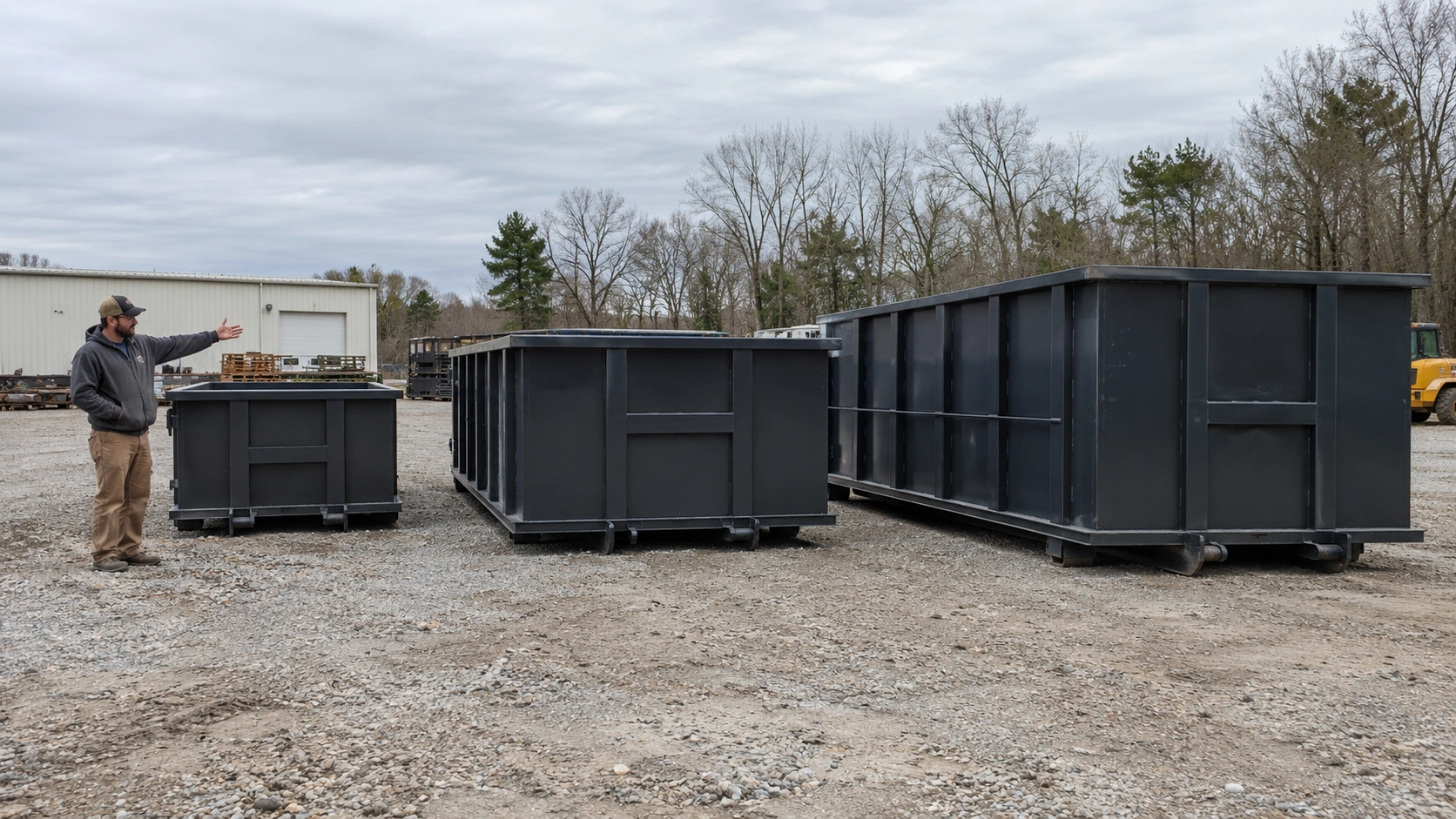
Common Roll-Off Size Categories
Sizes are measured in cubic yards — a unit of volume, roughly a cube three feet on each side. A "20-yard" container refers to its approximate volume, not a fixed set of dimensions; two containers in the same category can still differ in length, width, and height depending on the manufacturer. Some companies also describe capacity in pickup-truck loads for an easier mental picture — that's a rough visual aid, not an exact conversion, since truck beds and loading vary. The categories below are a general educational reference, not a list of what any specific provider stocks.
| Size Category | Relative Capacity | Common Project Scale | Example Use Cases | Important Caution |
|---|---|---|---|---|
| 10-yard | Smallest common category | Small, contained projects | Small cleanouts, minor renovation debris | Small volume doesn't mean unlimited weight allowance |
| 15-yard | Small-to-medium | Medium household or small remodel projects | Garage/basement cleanouts, small remodeling | A common category, but exact dimensions still vary by container |
| 20-yard | Medium | Larger cleanouts, renovation-scale projects | Flooring removal, deck removal, renovation debris | A versatile middle option, but not automatically the "most popular" one everywhere |
| 30-yard | Large | Large cleanouts and remodeling projects | Larger remodels, bulky debris, substantial property projects | Placement footprint and site access become more important |
| 40-yard | Largest common category | Major cleanouts and larger construction/demolition volume | Major cleanouts, large-scale demolition, bulky/light material | Not automatically the right call for very heavy material |
Not every provider stocks every size, so treat this table as a starting point and confirm what's actually available when you request a quote.
Roll-Off Sizes in Detail
What each category tends to suit, and where it can fall short.
10-Yard
Fits a single room, closet, or small storage-area cleanout, plus limited-scope jobs like a small bathroom update. It isn't a universal small-project fit, though — dense material can hit a weight limit here well before the container looks full, so a compact size doesn't automatically mean a light bill.
15-Yard
A common range for garage or basement cleanouts and small remodeling — bigger than a single-room job but well short of a whole house. Exact dimensions and weight allowances still vary from one container to the next.
20-Yard
Often the middle-ground choice for multi-room cleanouts, kitchen or bathroom remodels, flooring or deck removal, and mid-scope construction debris. It balances capacity against footprint reasonably well, though "most popular" doesn't mean automatically right for your project.
30-Yard
Suited to whole-home or estate-scale cleanouts, larger remodels, and bulky, furniture-heavy debris. This is where placement footprint and site access start to matter as much as the debris itself — make sure your property can actually fit both the container and the delivery truck.
40-Yard
The largest common category, generally reserved for major cleanouts and larger demolition or construction volume, especially bulky material that's heavy on volume but light on weight. A big container isn't automatically the right tool for dense debris — see below. Local availability at this size is the least certain of the five, so confirm it early.
Size Is Only Half the Decision: Weight vs. Volume
The categories above describe volume. Weight is a separate limit, and it's the one that catches people off guard.
Volume
How much physical space debris takes up inside the container.
Weight
How heavy the load actually is — measured independently of how full the container looks.
Bulky / Lighter
Furniture, branches, cabinets, lumber, general household contents
Dense / Heavy
Concrete, dirt, rock, brick, roofing shingles
A bigger dumpster doesn't automatically mean it can carry proportionally more dense material — transportation weight limits apply no matter how large the container is. For construction-specific weight planning, see the construction & renovation dumpster rental page.
Matching a Project to a Size Range
No project type has one correct size — here's what actually moves the needle for common projects:
Garage Cleanout
A smaller container often works, depending on how much has piled up and how bulky it is.
Whole-Home Cleanout
Usually mid-size to larger, scaled to the home's size and how much is being cleared.
Estate Cleanout
Often larger, though donating or recycling items first can bring the size down.
Kitchen/Bath Renovation
Small to mid-size, depending on how much demolition is involved.
Deck Removal
Scales with square footage and whether the material is bulky lumber or denser decking.
Roofing Project
Weight-driven more than volume-driven — roof size and layer count both matter.
Construction Project
Depends on scope, debris type, and how heavy the materials are.
Yard/Storm Cleanup
Mostly bulky brush needs less than a job that includes roofing or structural debris.
Duration, Material, and Dimensions Also Play a Role
Rental Duration
There's often a trade-off between a smaller container with a possible extra haul, and a larger one with more up-front capacity. Weigh duration, project pace, and available space together rather than sizing in isolation — see the cost & pricing guide for how this affects price.
Material Type
The same volume of mixed household debris, roofing material, or concrete calls for different planning, since acceptance and weight rules differ by material. See the prohibited & restricted materials guide before assuming everything can go in one container.
Dimensions & Access
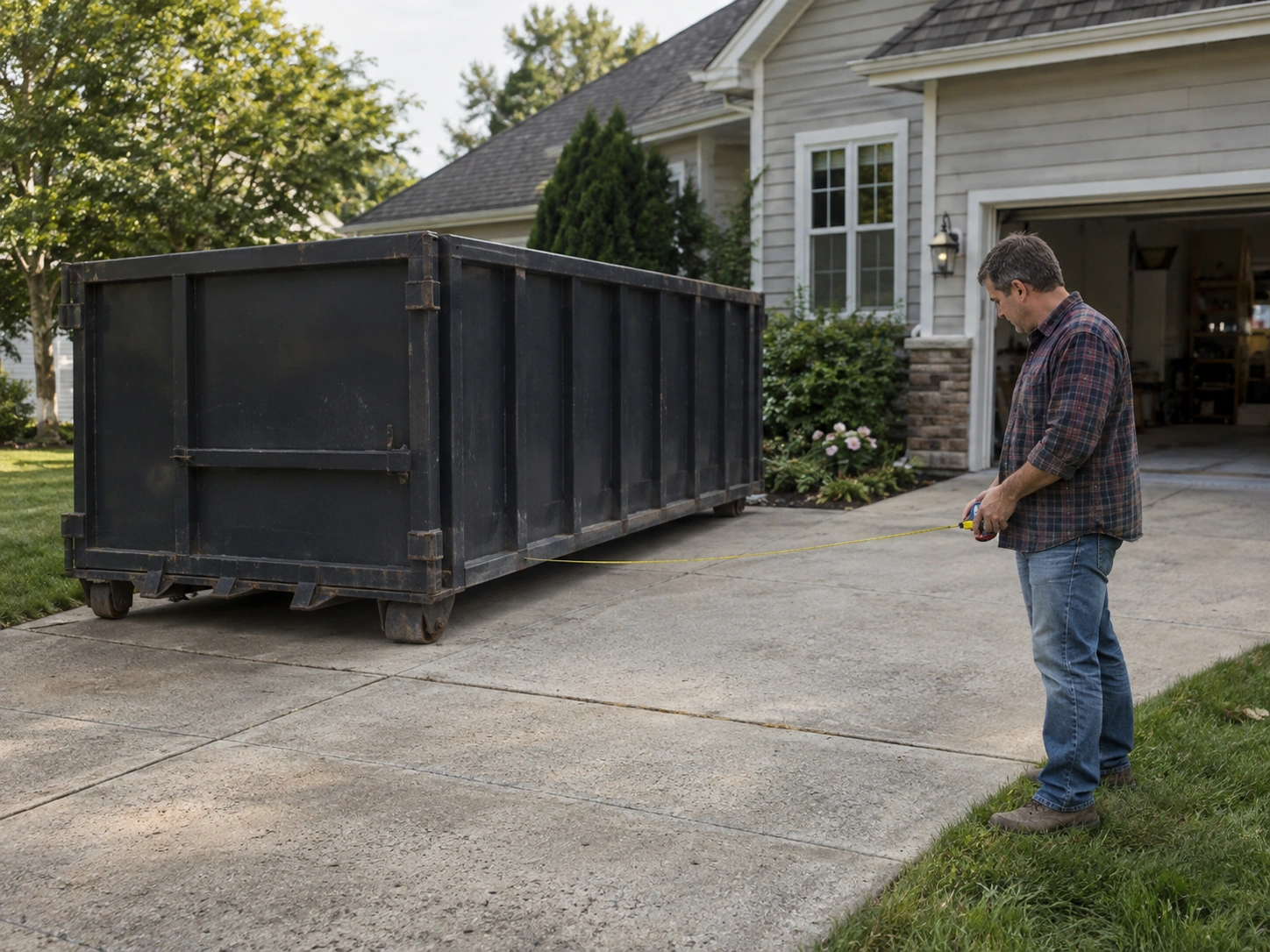
Exterior dimensions vary by manufacturer even within the same size category, and a larger container needs more than just its own footprint — the delivery truck needs clearance to maneuver, and overhead branches, wires, or parked vehicles can rule out an otherwise good option. See the placement & driveway guide for what to check on your property.
How to Estimate Your Project First
Define the project
What's actually being cleared, built, or removed.
Identify material types
Household items, construction debris, yard waste, or a mix.
Estimate approximate volume
A rough sense of how much space the debris would take up.
Identify dense or heavy materials
Concrete, dirt, rock, or roofing that will affect weight planning.
Note bulky furniture or items
Large pieces that take up disproportionate space.
Evaluate placement space
Where a container could realistically sit on your property.
Note access restrictions
Overhead clearance, slope, or tight areas that could limit options.
Estimate project duration
How long you'll likely need the container on-site.
Ask about dimensions, tonnage & overage
Get the actual container dimensions, included weight allowance, and overage terms in writing before booking.
Common Size-Selection Mistakes
- Choosing only by priceThe cheapest option isn't useful if it's the wrong size for the job.
- Assuming bigger is always betterCosts more, needs more space, and isn't automatically the safer choice.
- Ignoring debris weightA volume-only mindset is how overage charges happen.
- Underestimating bulky materialFurniture and large items fill space faster than expected.
- Mixing restricted materialsCan create disposal problems that a bit of sorting would have avoided.
- Ignoring placement spaceA size that doesn't fit your property isn't really an option.
- Ignoring truck accessThe container still has to get delivered and picked up.
- Assuming identical dimensionsTwo containers in the same size category can still differ in footprint.
Sizing Considerations Around Asheville
A lot of Asheville properties combine a renovation or cleanout project with a driveway that has real space constraints, which is why it's worth thinking about size and placement together instead of separately. A few local themes come up often:
- Residential driveways with limited room for the larger size categories
- Renovation and property-cleanout projects spanning a wide range of debris volumes
- Contractor work where weight planning matters as much as size
- Yard and storm cleanup, where the debris is usually bulky but light
These are planning themes, not a promise that a specific size is available for your property — confirm that when you request a quote.
Dumpster Size Questions, Answered
What size dumpster do I need?
It depends on your project type, expected debris volume, material weight, and available placement space — there's no single answer that fits every job. The decision guide above walks through the main factors for common project types.
What size dumpster do I need for a home cleanout?
A single room needs far less than a whole-house or estate cleanout — volume and how bulky the items are drive the decision more than square footage alone. See the cleanout dumpster page for more detail.
What size dumpster is used most often?
Mid-range categories tend to see the most use for typical residential projects, but that varies by market and doesn't substitute for sizing your own project's volume and weight.
What size dumpster do I need for construction?
Weight usually drives this more than volume — dense material like concrete or roofing needs different planning than bulky renovation debris. See the construction dumpster page.
Is a 20-yard dumpster big enough for a renovation?
Often, for a mid-scope project — but a bigger renovation or one with heavier debris may need more capacity or careful weight planning rather than just a bigger box.
Can I put concrete in a large dumpster?
Sometimes, but size doesn't solve the weight problem — dense material can hit a weight limit long before a large container looks full. Confirm before mixing concrete with other debris.
Does a bigger dumpster have a higher weight limit?
Not in proportion to its size. Weight allowances are a separate limit from volume and vary by container, so a larger size doesn't automatically buy you significantly more weight capacity.
How high can I fill a dumpster?
Up to the marked fill line, not the container walls — the real planning question is usually volume, not height. A container that looks like it has room left can already be at its weight limit, so "how full" and "how heavy" are two different checks worth doing before you assume you're done.
Will a roll-off dumpster fit in my driveway?
Possibly — it depends on the container's footprint and how much room the delivery truck needs to maneuver, which is usually more than the container's own size. See the placement guide for what to check.
How do I estimate how much debris I have?
Go material by material, flag anything bulky or heavy separately, and think in terms of physical space rather than item count. The estimating checklist above walks through it step by step.
Not Sure What Size Makes Sense?
Tell us about the project and the debris involved, and we'll help you narrow it down.