
Construction & Renovation Dumpster Rental in Asheville, NC
Construction and demolition debris behaves differently than household junk — it's often heavier, denser, and easier to underestimate. Planning for volume, weight, and site access ahead of time helps you avoid overload surprises and pickup delays.
- How to think about weight, not just container size
- Roofing, concrete, and other heavy-material planning
- What to check on-site before delivery
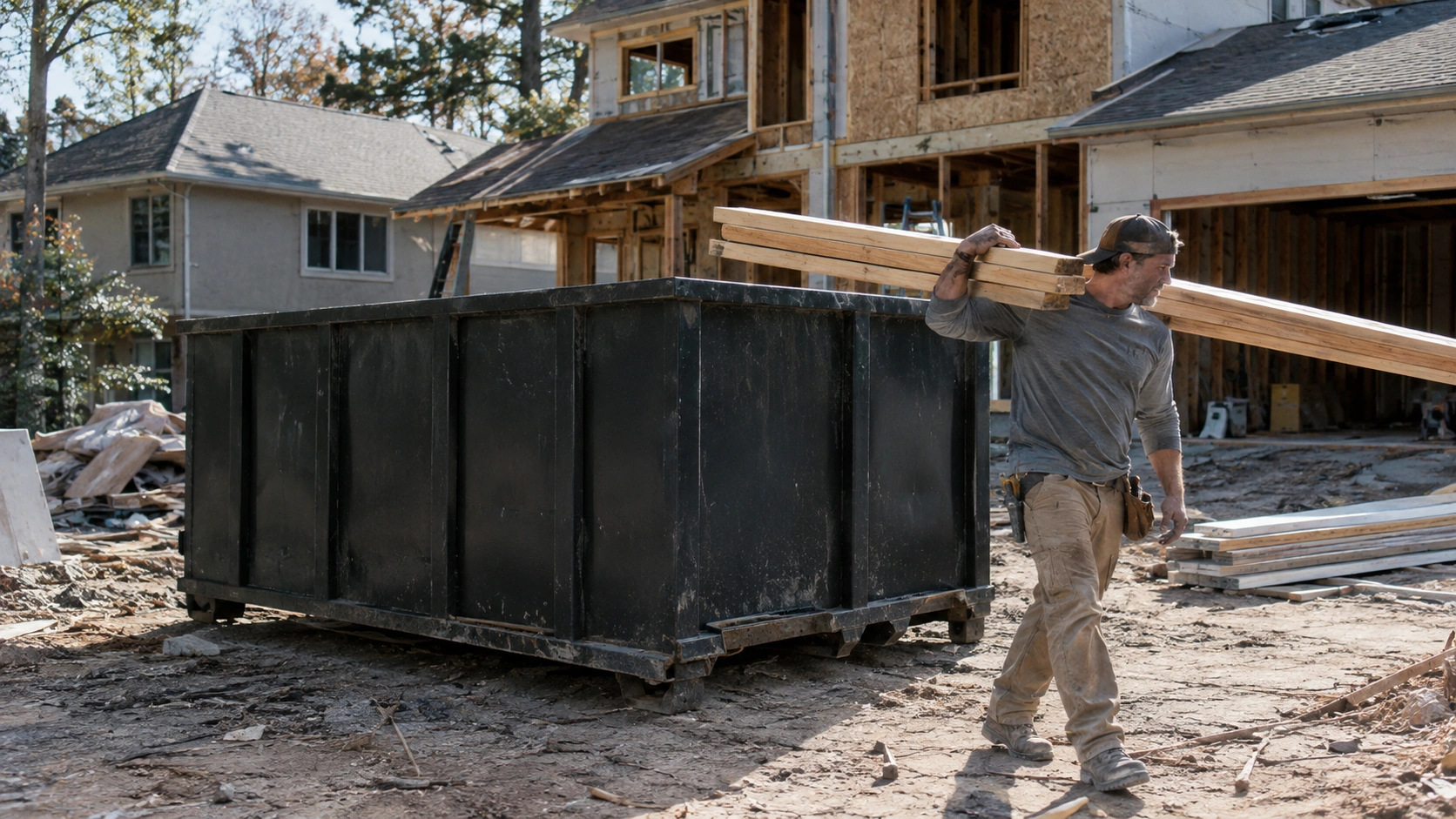
Projects That Commonly Create Construction Debris
Different project types generate different debris — in volume, weight, and material mix. A few common examples:
Kitchen & bath remodeling
Whole-home renovation
Deck removal
Demolition
Roofing replacement
Flooring removal
Drywall removal
Framing & lumber debris
Property rehabilitation
Not every material from a given project can automatically go into the same container — debris type, weight, and local disposal rules all factor into what's practical to combine.
Construction & Demolition Waste, Explained
"Construction and demolition waste" (often shortened to C&D waste) refers to debris generated by building, renovating, or tearing down structures — framing, drywall, roofing, concrete, flooring, and similar material. It's typically handled differently than household trash because of its volume, weight, and material mix.
- Mixed construction debrisMany projects generate a combination of material types in a single container.
- Bulky vs. dense debrisLightweight bulky material (drywall, lumber) and dense material (concrete, tile) fill a container very differently.
- Why material type mattersIt affects both how a container fills up and how the debris is eventually processed at a disposal facility.
- Why disposal requirements can varyLocal landfills, transfer stations, and recycling facilities can each have different rules for what they accept and how it must be separated.
Buncombe County's disposal facilities may have their own rules about separating recyclable material from general construction debris — confirm current requirements before your project generates debris, not after the container arrives.
Weight vs. Volume — Why This Matters More on Construction Projects
This is one of the most common construction-project surprises: a container can still have visible space left and already be at its weight limit. Size and weight are measured differently, and construction debris makes that gap more likely to matter.
Volume vs. Weight
- Cubic yardsMeasures volume — how much physical space the container holds.
- TonnageMeasures weight — a separate limit that doesn't depend on how full the container looks.
- Dense material fills by weight firstConcrete, brick, dirt, rock, and roofing shingles can hit a weight limit while a container still looks far from full.
- Bulky material fills by volume firstDrywall, lumber, cabinets, and fixtures often take up visible space well before they're heavy.
- Overloading causes real problemsA container that's too heavy may be unsafe or unable to be transported until weight is reduced.
Dense / Heavy Examples
Concrete, brick, dirt, rock, roofing shingles
Lighter / Bulkier Examples
Drywall, lumber, cabinets, fixtures, general renovation debris
Weight allowances and overage rates vary by provider — confirm them for your specific material mix before ordering, rather than assuming a size alone is enough.
See the full dumpster size guide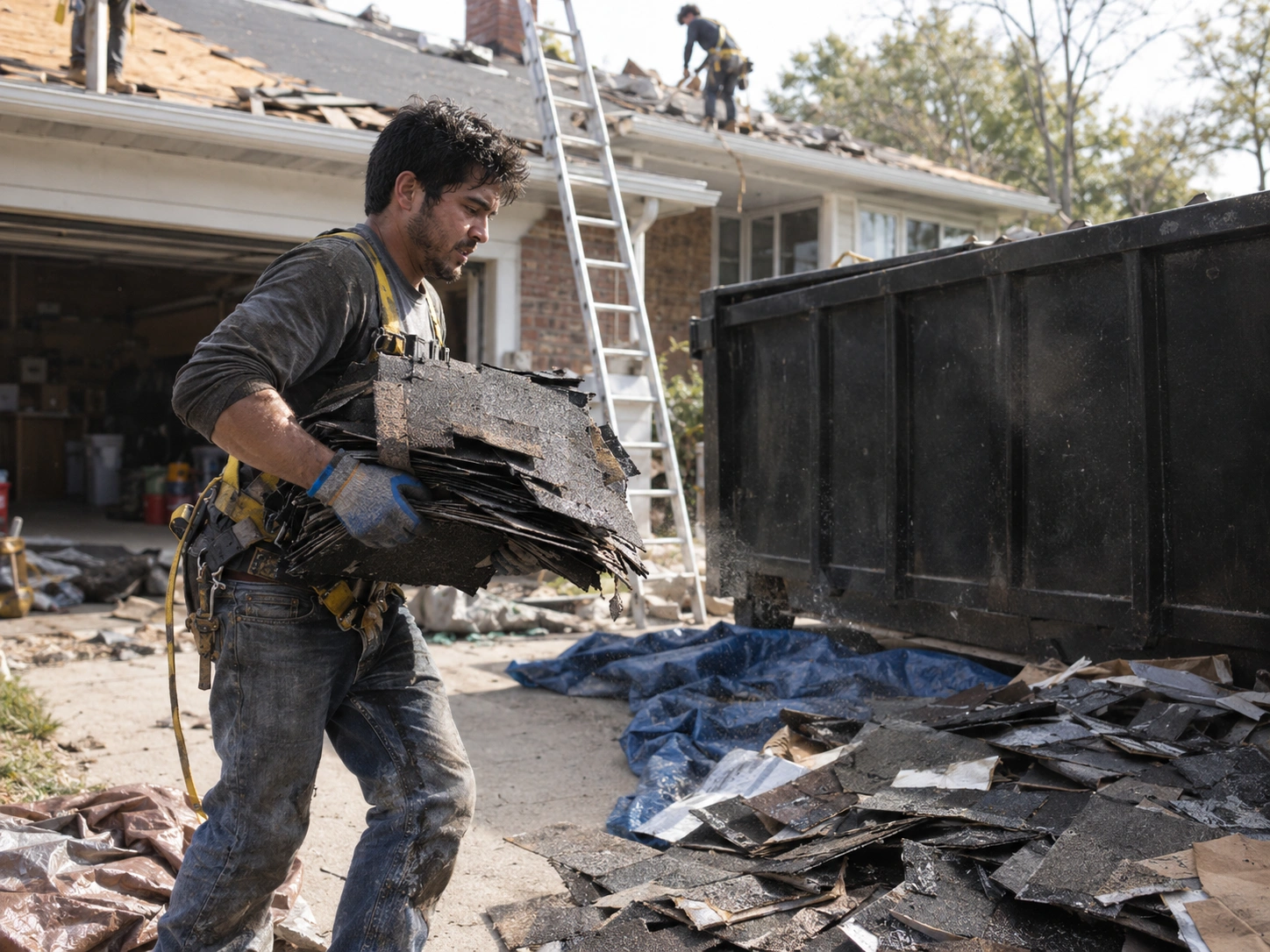
Roofing Debris Needs Its Own Planning
Roofing tear-offs are a common source of the weight-vs-volume surprise above. A relatively small pile of shingles can be far heavier than it looks.
- Shingles add weight quicklyOld roofing material is dense — a modest-looking pile can already approach a weight limit.
- Estimate volume before orderingRoof size and number of layers being removed both affect how much debris the project generates.
- Nails & sharp debrisLoose nails and torn material need careful, deliberate loading rather than being tossed in loosely.
- Disposal considerations can differSome facilities handle roofing material differently than general construction debris.
There isn't one container size that's automatically correct for every roofing job — roof size, layer count, and material type all factor in. Confirm sizing for your specific project when you request a quote.
Concrete, Dirt, Rock & Other Heavy Materials
Heavy, dense materials require more planning than typical renovation debris because they concentrate weight into a small area.
- Weight concentrationA small volume of concrete, dirt, or rock can weigh far more than the same space filled with lighter debris.
- Loading considerationsHeavy material is often better suited to smaller, dedicated loads rather than mixed in with bulky debris.
- Transportation limitsFully loaded heavy-material containers may approach limits that affect how they can be hauled.
- Facility rules may differSome disposal facilities handle concrete, dirt, and rock separately from general C&D debris.
- Mixing materials affects handlingCombining heavy material with general debris can complicate both weight planning and disposal processing.
Whether a specific material is accepted — and under what conditions — depends on the provider and the local disposal facility. See our materials guide before assuming.
Safe Loading & Fill Level
How debris goes into the container matters, not just how much of it there is.
- Distribute material reasonablySpreading debris evenly helps avoid uneven, unstable loads.
- Stay below the fill lineMaterial shouldn't project above the container walls or marked fill level.
- Avoid unstable pilesPrecariously stacked debris can shift or fall during loading or transport.
- Handle sharp objects carefullyNails, broken material, and jagged debris deserve deliberate placement, not tossing.
- Confirm before loading unknownsDon't load questionable chemicals or containers without confirming how they need to be disposed of.
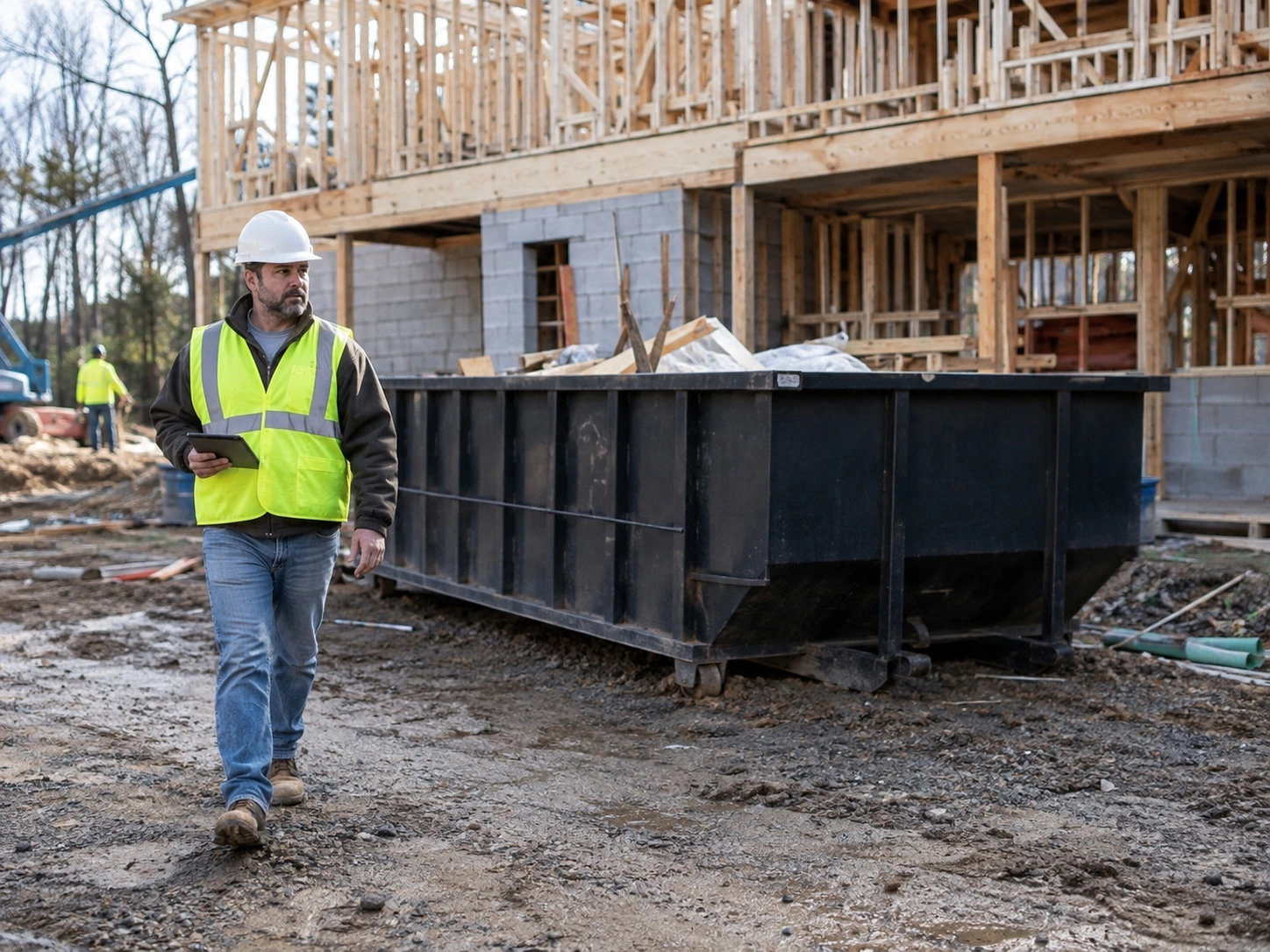
Planning Dumpster Placement on an Active Job Site
An active construction site has more moving parts than a typical driveway delivery. Worth checking ahead of time:
- Truck maneuvering spaceRoom for the delivery vehicle to approach and lower the container safely.
- Worker & vehicle trafficPlacement that doesn't interfere with crew movement or equipment access.
- Gates & site accessConfirming the truck can reach the site and any access restrictions are coordinated.
- Parked equipmentMaterials, machinery, or vehicles that may need to be relocated before delivery.
- Overhead utilities & branchesWires or low branches that could interfere with placement or pickup.
- Stable placement surfaceGround that can support the container's weight once loaded.
- Clear pickup pathKeeping access open for the truck when it's time for pickup or a swap.
What Affects Cost for a Construction Project
Construction pricing is shaped by the same core factors as other rentals, with weight and material type often playing a larger role.
Container Capacity
Larger containers generally cost more, but the right size can be more efficient than an extra swap.
Rental Duration
Longer projects are typically priced differently than short, fixed-length rentals.
Debris Type & Weight
Dense material like concrete or roofing is often priced differently than general renovation debris.
Included Tonnage
Quotes typically include a set weight allowance where applicable, before an overage rate applies.
Overage & Haul Fees
Exceeding weight or fill limits, or requiring extra hauling, usually adds cost.
Additional Pickups or Swaps
Longer projects sometimes need a container emptied and returned partway through — a general planning consideration worth asking about, not something every provider offers.
Restricted & Hazardous Materials in Renovation & Demolition
Renovation and demolition projects — especially on older buildings — can turn up materials that need specialized handling, testing, or a separate disposal route rather than going in with general debris.
Asbestos-containing materials
Lead-related debris
Paint
Solvents
Fuels & oils
Chemicals
Refrigerant-containing appliances
Batteries & electronics
Unknown containers or materials
Older buildings in particular can contain materials like asbestos or lead-based products that require testing and specialized disposal rather than standard debris handling. This page doesn't provide legal, medical, or regulatory guidance — confirm requirements with a qualified professional and the appropriate local, state, or federal authority before disturbing or disposing of suspect material.
Construction & Renovation Debris Around Asheville
Asheville's ongoing renovation and rebuilding activity, combined with mountain terrain and older building stock in parts of the area, shapes how construction debris projects typically get planned locally. Common themes include:
- Renovation and remodel projects on older homes and buildings, which can generate heavier or more mixed debris
- Reconstruction and repair work tied to storm-related damage in the region
- Mountain terrain and tight or sloped sites that affect where a container can realistically be placed
- Local disposal facilities that may apply their own rules to construction and demolition debris
These are practical planning themes, not guarantees of service or facility acceptance for a specific project — confirm current requirements before your project begins.
How to Plan a Construction Dumpster Before Delivery
Identify the project type
Remodel, demolition, roofing, or another construction project — each generates different debris.
Estimate debris volume
A rough sense of how much material the project will generate overall.
Identify heavy or dense materials
Concrete, roofing, dirt, or rock that will affect weight planning.
Identify questionable materials
Anything that might need special handling, like paint, chemicals, or older building materials.
Evaluate the placement area
Where the container can sit without disrupting site work.
Check overhead & access clearance
Wires, branches, gates, and truck maneuvering room.
Estimate project duration
How long the container will likely be needed on-site.
Confirm disposal restrictions
Check applicable rules before loading anything questionable, not after.
Construction Dumpster Rental Questions, Answered
What size dumpster do I need for a construction project?
It depends on the project type, expected debris volume, and how heavy the material is. A small remodel needs far less capacity than a full demolition. Our size guide covers how to think it through.
Can concrete go in a roll-off dumpster?
Concrete is often handled differently than general debris because of its weight — some providers require a dedicated container or have separate rules for it. Confirm before mixing concrete with other renovation debris. See our materials guide.
Can roofing shingles go in a dumpster?
Often yes, but shingles are dense and can add weight quickly, so sizing and weight planning matter more than for typical debris. Confirm expected volume and weight allowances before your roofing project starts.
Why does dumpster weight matter?
Container size measures volume, but weight (tonnage) is a separate limit. Dense material like concrete, dirt, or roofing can reach a weight limit well before the container looks full, which can affect cost and pickup.
What happens if a dumpster is too heavy?
An overweight container may incur an overage charge and, in some cases, may be unsafe or unable to be transported until weight is reduced. Confirm weight allowances before loading dense material.
How high can I fill a dumpster?
To the marked fill line, same as any roll-off — but on a construction job, weight usually becomes the limiting factor before height does. A load of shingles or mixed C&D debris can hit the tonnage allowance while there's still visible room left, so watch the weight, not just how full it looks, as the job progresses.
Can I mix different types of construction debris?
Sometimes, but mixing heavy material with bulky debris can complicate weight planning, and some disposal facilities require certain materials to be separated. Confirm what can be combined before loading.
What materials require special disposal?
Items like asbestos-containing material, lead-related debris, paint, solvents, fuels, chemicals, and refrigerant-containing appliances often need separate handling. See our materials guide before assuming something is fine to load.
Do I need a permit for a construction dumpster in Asheville?
Permit requirements can depend on where the container is placed — private property is typically treated differently than a public street or right-of-way. Because local requirements can change, confirm current rules with the City of Asheville or Buncombe County before scheduling delivery.
Planning a Construction or Renovation Project?
Tell us about your project — including debris type and expected volume — and we'll help you think through sizing.
Managing a broader property, tenant turnover, or multi-project site instead? See our commercial & contractor dumpster rental page.