
Residential Dumpster Rental in Asheville, NC
Cleaning out a garage, tackling a remodel, or clearing a house before a move? A residential roll-off dumpster gives you one place to put debris instead of repeated trips to the dump. Here's how to plan for one at your Asheville home.
- Guidance on sizing for common home projects
- What to check before delivery — space, access, and surface
- What typically needs special handling before you load it
- A simple way to request a quote for your project
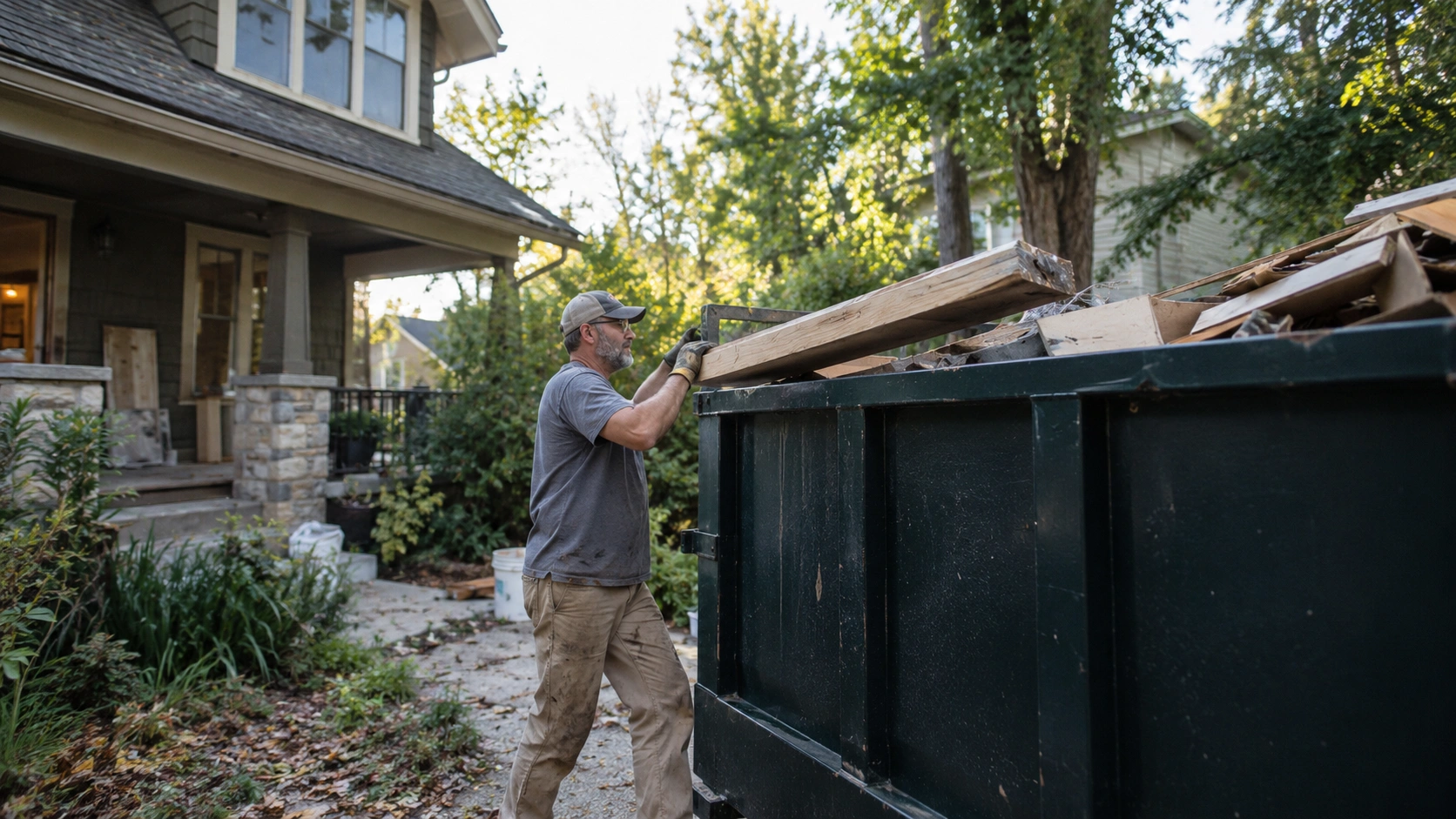
When a Residential Dumpster Makes Sense
Homeowners typically reach for a dumpster rental when a project produces more debris than a curbside cart can handle, or when it needs to be gone all at once rather than over several weeks.
Garage, Basement & Attic Cleanouts
Years of accumulated storage, old furniture, and household items that no longer fit anywhere else.
Moving & Downsizing
Clearing out items you're not taking with you before a move or a transition to a smaller home.
Estate Cleanouts
Clearing a property after a family transition, often involving a full house worth of belongings and debris at once.
Renovation & Remodeling
Drywall, flooring, cabinetry, and fixtures removed during a kitchen, bathroom, or whole-home remodel.
Deck Removal & Outdoor Projects
Old decking, fencing, and outdoor structures that need to come down and be hauled away.
General Household Decluttering
Bulky furniture, appliances, and household junk that's accumulated over time and needs to leave all at once.
Material restrictions and weight considerations vary by project — a garage cleanout and a roofing tear-off load very differently, even in the same size container.
What Size Dumpster Do You Need for a Home Project?
Home projects vary widely in how much debris they generate, so it's worth thinking through a few factors before booking rather than guessing.
- Debris volumeA single-room cleanout needs far less capacity than a whole-house cleanout.
- Material typeBulky, lightweight items (furniture, boxes) fill space differently than dense material (tile, drywall, roofing).
- Bulky vs. dense loadsA container can "fill up" by volume or by weight first, depending on what's going in it.
- Available placement spaceYour driveway or yard space can rule out larger sizes regardless of project size.
- Project durationA weekend cleanout and a multi-week remodel have different timing needs.
Not every provider stocks every size, so confirm availability for your specific project when you request a quote.
See the full dumpster size guide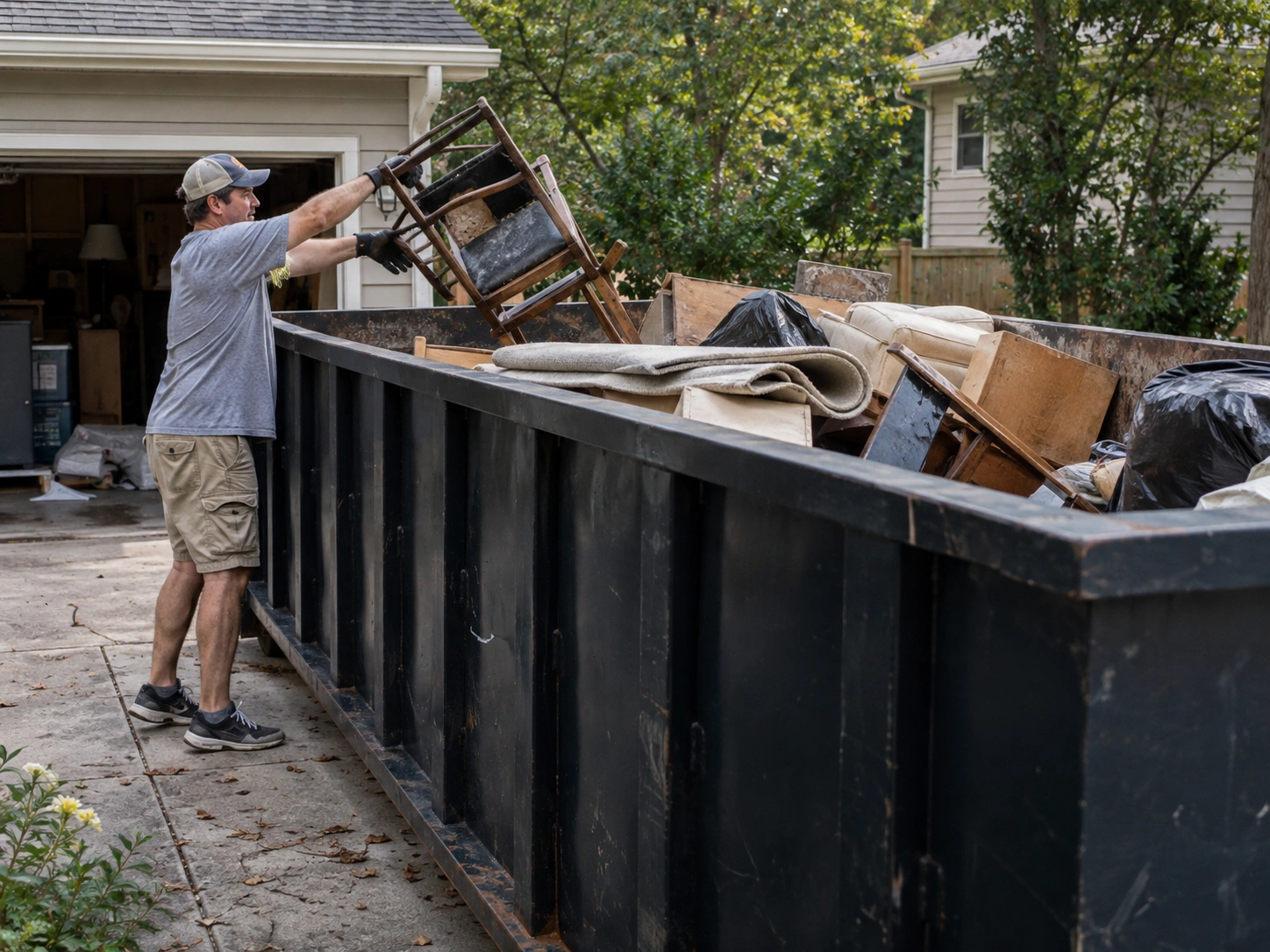
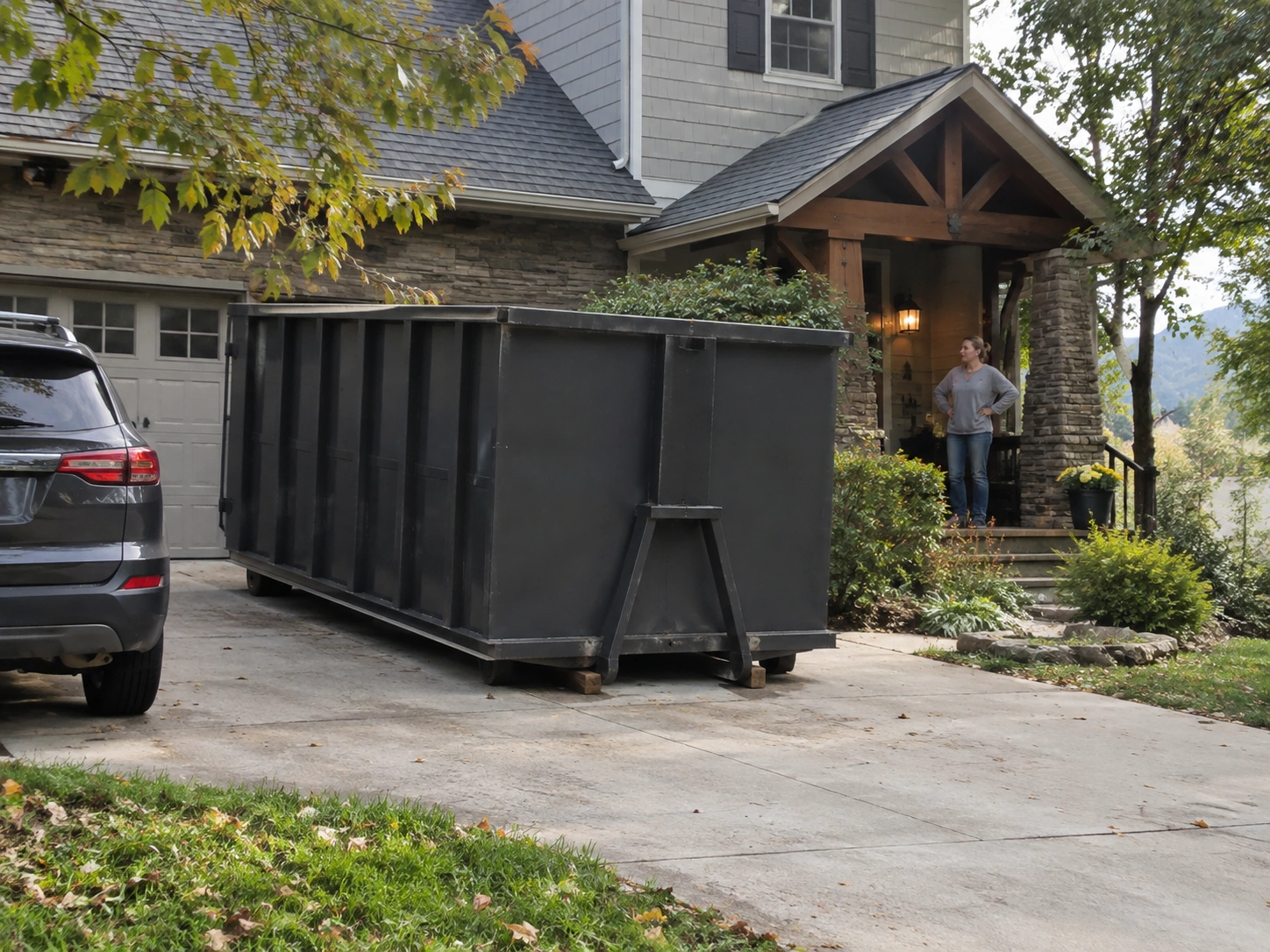
Planning Driveway & Placement for a Home Delivery
Where the container will sit matters as much as its size. Before scheduling delivery at a residential property, it's worth checking:
- Driveway width & usable spaceEnough length and width for the container itself, clear of landscaping.
- Delivery truck accessRoom for the truck to approach, position, and lower the container.
- Parked vehiclesCars or other vehicles that may need to move before delivery.
- Overhead clearanceLow tree branches or utility wires that could interfere with placement.
- Stable, hard surfaceA flat driveway or paved area is generally preferred over soft or sloped ground.
- Clear access pathKeeping a walkway to the container open for loading throughout the rental.
What May Require Special Handling
Most everyday household debris is straightforward, but certain materials commonly found around a home need separate handling rather than going in with general debris:
Paint & solvents
Household chemicals
Batteries
Electronics
Tires
Propane tanks & fuels
Asbestos or unknown hazardous material
Refrigerant-containing appliances
Medical waste & sharps
This list is a starting point, not a complete legal determination — exact restrictions can vary by provider and by local disposal facility rules. If you're unsure whether something can go in with your household debris, confirm before loading it rather than guessing.
What Affects Cost for a Residential Rental
Pricing for a home project depends on a combination of factors rather than a single flat rate. Knowing these ahead of time makes it easier to compare quotes.
Container Size
Larger containers generally cost more, though the right size can still be more economical than needing a second one.
Rental Duration
Most rentals include a set number of days, with a possible extension charge for longer projects.
Debris Type
Dense material like tile, dirt, or roofing is often priced differently than typical household items.
Weight & Tonnage
Quotes usually include a set weight allowance, with an overage rate if you go beyond it.
Disposal Charges
Fees tied to the local landfill or transfer station are often factored into the overall price.
Delivery & Pickup
Distance and access at your property can also factor into the total.
How It Works for a Home Project
The general flow is similar across most residential rentals, though exact details vary by provider.
-
Describe your project
Share what you're clearing out and roughly how much debris is involved.
-
Determine a suitable container
Match the project to an appropriate size based on volume, material, and space.
-
Choose a placement location
Decide where on your property the container will sit and confirm access.
-
Arrange delivery
Coordinate a delivery window that works with your schedule and property access.
-
Load within guidelines
Keep debris below the fill line and restricted materials out.
-
Arrange pickup
Schedule pickup once loading is finished or your rental period ends.
Dumpster Rental vs. Other Options for Home Projects
A dumpster isn't the only way to clear debris from a home project. Which option fits best depends on volume, your ability to load it, and your timeline.
Vs. Junk Removal
Junk removal includes labor to haul items away for you, while a dumpster leaves loading to you. Which is more cost-effective depends on debris volume, labor, and timing.
Vs. Repeated Dump Runs
A few small loads may work fine as DIY trips, while larger cleanouts are often easier to manage with one on-site container — it depends on volume and available time.
Vs. Dumpster Bags & Trailers
For light-volume projects, a debris bag or trailer can be a reasonable alternative to a full roll-off container.
Planning a Residential Dumpster Around Asheville Homes
Many Asheville neighborhoods combine older homes with sloped lots and tighter driveways, which can shape both the project itself and where a container can realistically be placed. Common situations for homeowners locally include:
- Renovation projects on older homes that generate more debris than a comparable newer build
- Property cleanouts tied to a sale, move, or family transition
- Roofing debris from tear-offs and re-roofing projects
- Seasonal yard cleanup, including storm-related limbs and brush
- Driveway and access planning on sloped or tighter residential lots
These are practical planning factors, not guarantees of availability at a specific address — confirm the details for your property when you request a quote.
Residential Dumpster Rental Questions, Answered
What size dumpster do I need for a home cleanout?
It depends on how much you're clearing out and what kind of material it is. A single garage or room cleanout typically needs far less capacity than a full-house or estate cleanout. Our size guide walks through how to match your project to a size range.
How long can you keep a dumpster when you rent it?
Rental periods vary by provider and are usually set for a specific number of days, with the option to extend if needed. Confirm the included window and any extension rate before booking so it fits your project timeline.
Can a dumpster fit in my driveway?
Most residential driveways can accommodate a dumpster, but the delivery truck also needs room to maneuver and lower the container, plus overhead clearance from branches or wires. Measuring your space ahead of time helps avoid delivery issues — see our placement guide.
What can you not put in a dumpster?
Most rentals restrict hazardous and specialty items such as paint, chemicals, batteries, tires, propane tanks, and certain electronics or appliances. Restrictions can vary by provider and local disposal facility, so confirm before loading anything questionable. See our prohibited materials guide.
How high can I fill a dumpster?
Up to the marked fill line, not the top edge of the walls — it's an easy line to cross on a cleanout once furniture and boxes start piling up. Once you're near it, switch to stacking flatter items on top rather than adding more bulky pieces, and check our size guide if you're consistently running out of room.
Is it cheaper to go to the dump myself or rent a dumpster?
It depends on how much debris you have, how many trips it would take, your vehicle, and the value of your time. A few small loads can be more cost-effective as DIY trips, while larger cleanouts are often more efficient with a single on-site container.
Is dumpster rental cheaper than hiring junk removal?
Dumpster rental can be more cost-effective when you're able to load debris yourself, while junk removal includes labor to haul it away for you. Which is more cost-effective depends on debris volume, labor, timing, and provider pricing.
Do I need a permit for a dumpster at my house?
Permit requirements can depend on where the dumpster sits — placement entirely on private property is often treated differently than placement on a public street. Because local rules can change, confirm current requirements with the City of Asheville or Buncombe County before scheduling delivery.
Planning a Home Project?
Tell us what you're clearing out and we'll help you think through sizing and next steps.